
How Long Does Paint Smell Last, and Is It Safe to Sleep in the Room?
With modern low-VOC latex paint, the strongest paint smell usually fades within 24 to 72 hours, though the coating keeps curing for several weeks afterward. It’s generally safe to sleep in a freshly painted room once the paint is dry, the space has been well ventilated, and the odor has noticeably faded but rooms with a strong lingering smell should air out longer before regular use, especially for children, older adults, pets, or anyone with respiratory sensitivities. In New London and neighboring shoreline communities, coastal humidity and older home construction can slow this timeline down further.
Why Does Paint Still Smell After the Walls Feel Dry?
Drying and curing are two different processes. Drying is when enough water or solvent evaporates for paint to feel dry to the touch for many acrylic latex paints, that happens within a few hours. Curing takes much longer: the paint film keeps hardening and building durability while remaining VOCs gradually off-gas into the air. That off-gassing, not heavy fumes like older oil-based paints, is what causes the lingering “fresh paint” smell for several days after a room looks finished.
Coastal humidity extends this process. New London’s humid summer days, damp mornings, and rainy weather slow evaporation even after walls look completely dry. Older homes in areas like Downtown New London or the Bank Street area also tend to have less consistent airflow than newer construction, which lets odors linger longer simply because indoor air exchanges more slowly.
How Long Does Paint Smell Typically Last?
With quality low-VOC latex paint, the strongest odor usually shows up in the first few hours, then fades over the next one to three days as ventilation clears airborne compounds and the paint continues curing. The coating itself may keep curing internally for several weeks beyond that before reaching full hardness.
Several factors influence how long the smell actually lasts:
- Type of paint and primer used
- Indoor humidity levels
- Room temperature during and after painting
- Amount of natural or mechanical ventilation
- Whether multiple coats were applied
- Size of the room
- How tightly the home is sealed for energy efficiency
This is why two homes using identical paint can have very different experiences — one may lose the smell in two days, another may still notice a faint odor a week later simply due to humidity or limited air exchange. Neither means anything is wrong with the paint.
Is It Safe to Sleep in a Freshly Painted Room?
For most healthy adults, sleeping in a room painted with modern low-VOC latex paint is generally reasonable once the paint is dry, the room has been well ventilated, and the odor has substantially faded. The real question isn’t just whether the paint is dry — it’s whether the indoor air has had time to exchange with fresh outdoor air while the initial off-gassing period passes. If the smell is still strong enough to make you hesitate several hours after painting, more ventilation is worth doing before spending the night there.
Some people should be more cautious around lingering paint odor, even with low-VOC products:
- Infants and young children
- Pregnant individuals
- Older adults
- People with asthma or other respiratory conditions
- Anyone particularly sensitive to chemical odors
- Pets that can’t easily leave the room if uncomfortable
Prolonged exposure to strong odor in a poorly ventilated space can occasionally cause temporary headaches, eye or throat irritation, or dizziness. If that happens, improving ventilation and getting fresh air is the right first step, if symptoms are severe or persist, seek medical guidance rather than assuming it’s just part of the painting process.
Why Do Paint Odors Sometimes Last Longer Than Expected?
The building itself usually explains the difference more than the paint quality does. New London has everything from historic Colonial and Victorian homes to mid-century ranches and newer waterfront condos. Older homes around Downtown, the Williams Street Historic District, and Bank Street often have limited cross ventilation, while newer, tightly sealed energy-efficient homes can trap indoor air just as long. Basement bedrooms or rooms with only one operable window tend to hold odors longer for the same reason — less air exchange.
Season matters too. During humid summers, running AC with windows closed recirculates indoor air rather than replacing it with fresh air. On rainy days, keeping windows shut for practical reasons has the same effect. None of this means anything went wrong with the paint job, it just slows the natural curing and ventilation process.
What Helps Paint Smell Fade Faster?
The goal is helping remaining VOCs dissipate and letting fresh air circulate — not masking the smell. A few steps make a real difference:
- Open windows when weather permits to create cross ventilation.
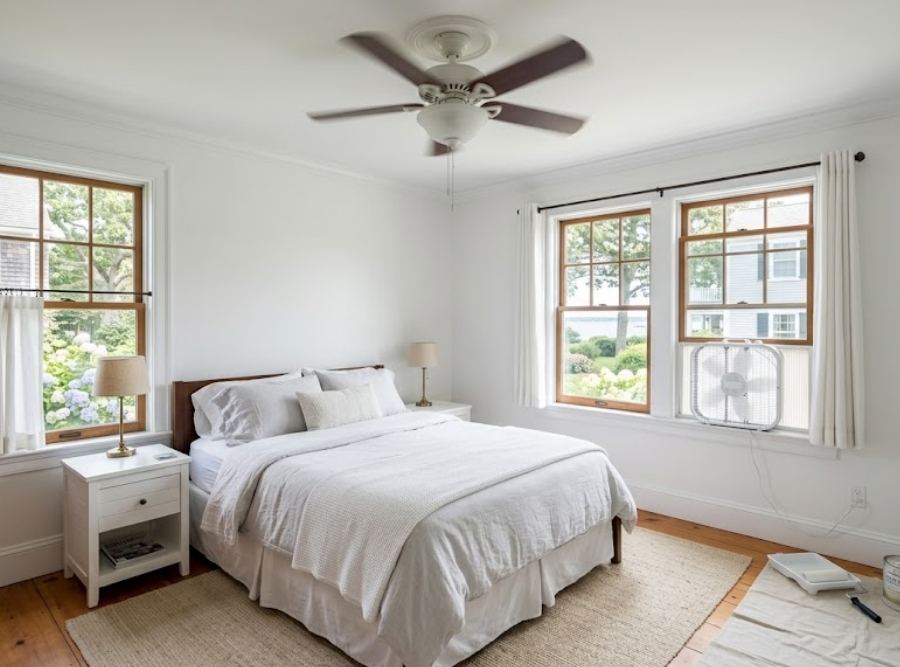
- Use box fans or exhaust fans to push indoor air outside rather than just circulating it.
- Run a portable air purifier with an activated carbon filter for extra odor reduction.
- Keep indoor humidity moderate, especially in summer.
- Give extra curing time before pushing furniture tightly against freshly painted walls.
- Replace HVAC filters after a large interior painting project if odor seems to circulate through the home.
Candles, air fresheners, and scented products only mask the smell temporarily — they don’t speed curing or remove the compounds causing the odor. Ventilation is what actually helps.
If you’re planning an interior painting project in New London or a nearby shoreline community, the Simons Painting & Drywall team can help you choose quality low-VOC coatings, prepare surfaces properly, and explain what to expect as the room finishes curing.
Learn more on our Interior Painting page.
Frequently Asked Questions About Paint Smell and Curing Time
How long after painting a room is it safe to sleep in it?
Most people can safely sleep in a freshly painted room once the paint is dry, the space has been well ventilated for several hours, and the odor has noticeably faded, often within the first day for a well-ventilated room with low-VOC paint. Rooms with limited airflow or a strong lingering smell should air out longer before regular use.
Is fresh paint smell dangerous to breathe?
Modern low-VOC latex paints are far less concentrated than older oil-based products, but prolonged exposure in a poorly ventilated space can still cause temporary headaches, eye irritation, or dizziness in some people. Improving ventilation typically resolves this quickly; persistent or severe symptoms warrant medical guidance.
Why does paint smell last longer in some rooms than others?
Odor duration depends more on the room and building than the paint itself — humidity, ventilation, room size, number of coats, and how tightly the home is sealed all affect how quickly VOCs dissipate. A basement room with one window will hold odor longer than a well-ventilated upstairs bedroom, even with identical paint.
Do air fresheners or candles get rid of paint smell faster?
No. These products only mask the odor temporarily and do nothing to speed curing or remove the compounds causing the smell. Ventilation — open windows, fans moving air outside, and moderate indoor humidity is what actually helps paint odor fade.

Shea Simons is the owner of Simons Painting & Drywall, a family-owned painting and refinishing company serving Connecticut Shoreline communities from East Lyme and Niantic to Old Saybrook, Madison, and Mystic. Shea and his team specialize in interior and exterior painting, drywall repair and installation, and fine refinishing work for cabinets, furniture, and custom walls. Homeowners along the shoreline know Shea’s crew for meticulous prep work and a finish built to hold up against coastal salt air and humidity.