The Best Wood Staining & Clearcoat Finishing on the Connecticut Shoreline
Wood is the one surface in a home that improves with the right finish and disappears with the wrong one. A stain that is too dark loses the grain. A clearcoat that clouds or yellows flattens the depth. At Simons Painting & Drywall, staining and finishing work begins with an honest assessment of what the wood is, what it has been through, and what finish will let it look exactly like itself — only better. Call Simons Painting & Drywall at (860) 846-4005 to schedule your estimate.
What Makes Wood Finishing Different From Painting
Painting covers a surface. Finishing reveals one. The preparation for staining requires understanding how a specific species absorbs color — softwoods like pine take stain unevenly without conditioning, hardwoods like oak and maple have open pores that need to be sealed before clear finishing.
Getting even color without blotching requires patience, the right prep, and an understanding of how wood behaves. We don’t apply stain the same way to every surface because every wood species responds differently.
The Finishing Process
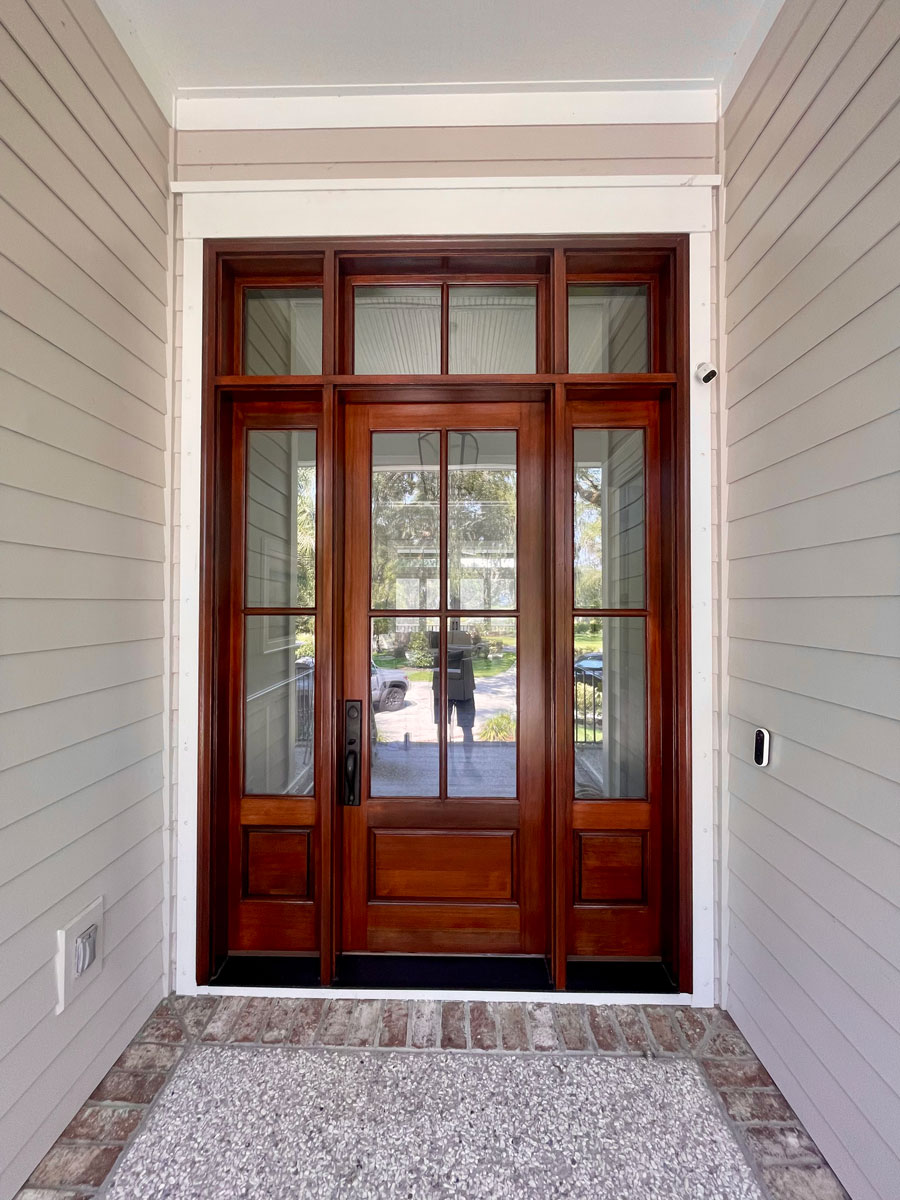
Every wood finishing project starts by stripping or sanding the existing finish down to bare wood. We clean the surface thoroughly, repair any damage, and assess the grain for conditioning needs. Stain is applied and wiped to control penetration depth and achieve even color. Clearcoat goes on in multiple thin coats — typically two to three — with light sanding between each to build protection without creating a plastic look. The final coat is buffed to the sheen the homeowner has selected.
What We Stain and Finish
Interior Painting Service Areas – Connecticut Shoreline
Frequently Asked Questions About Staining & Clearcoat Finishes on the Connecticut Shoreline
Can you match an existing stain color on my Connecticut Shoreline home?
In most cases yes. We use color-matching tools to identify the closest available stain to an existing finish. On aged wood that has faded or shifted in tone, an exact match requires a test section to see how the new stain interacts with the existing color. We do test matches before committing to a full project on aged surfaces.
What is the difference between a penetrating stain and a film-forming stain?
Penetrating stains absorb into the wood fiber and become part of the surface — they provide color and some protection, require reapplication more frequently, and maintain the texture of the wood. Film-forming stains or tinted clearcoats build a protective layer on top of the surface — they provide more durability and moisture protection but can peel over time if the film is breached. For coastal Connecticut Shoreline applications, the choice depends on the surface, its exposure, and the homeowner’s maintenance preference.
How long does a clearcoat finish last on interior woodwork?
A properly applied catalyzed or waterborne urethane clearcoat on interior woodwork — trim, railings, built-ins — should last 10 years or more with normal cleaning and without harsh abrasives. High-traffic surfaces like stair railings and door surrounds may need a refresh coat in 7-10 years depending on use. The sheen will dull before the protection fails — a light recoat restores it without stripping the whole project.
Can you stain over previously painted wood trim?
Not directly — stain does not adhere over paint. To achieve a stained finish on previously painted wood, the paint must be completely stripped and the bare wood prepared. For trim that has been painted many times and has significant paint build-up, stripping is a substantial project and we assess whether it is more practical to refinish with a painted finish in a complementary tone. We advise honestly before starting.
Do you apply clearcoat to exterior surfaces on Connecticut Shoreline homes?
Yes, with specific products rated for exterior use. Exterior clearcoats and tinted finishes on wood trim, doors, and shutters require UV-resistant formulations and products that allow moisture vapor to escape without trapping it behind the film. In coastal environments, film-forming exterior finishes that seal moisture in rather than allowing it to breathe fail rapidly. We select products for the specific exposure condition of each surface.
Ready to Bring Timeless Beauty to Your Home?
Tell us a bit about your project, and we’ll get back to you promptly to schedule an estimate.