
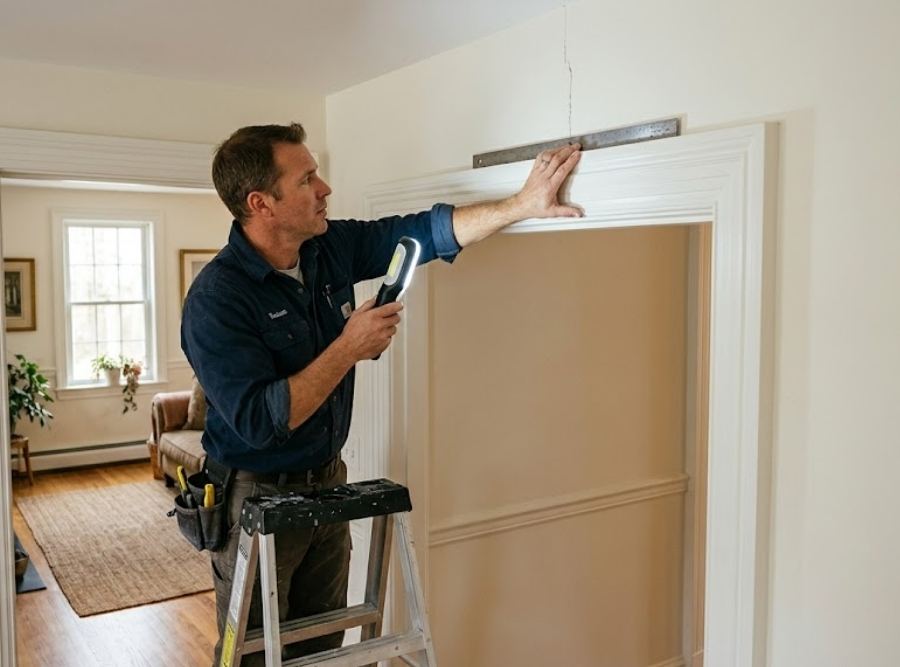
How Do I Know if a Wall Crack Is Just Cosmetic or a Structural Problem?
Most wall cracks are cosmetic, caused by normal seasonal settling, humidity changes, or drywall movement rather than a structural problem. However, a crack that keeps widening, reopens wider after a prior repair, or shows up alongside sticking doors, uneven floors, or foundation movement is worth evaluating before it’s simply patched and repainted. In Flanders and the surrounding East Lyme area, Connecticut’s freeze-thaw cycles and seasonal humidity swings cause enough normal home movement that recognizing these patterns can save homeowners from repeated repairs or unnecessary worry.
What Makes a Wall Crack Cosmetic Rather Than Structural?
Drywall is attached to a wood-framed structure that naturally expands, contracts, and settles throughout the year. As framing responds to seasonal humidity and temperature shifts, that movement transfers to drywall joints, often creating hairline cracks that are purely cosmetic. This is especially common above doors and windows, where structural headers carry loads differently than the surrounding wall, and where walls meet ceilings or inside corners.
A cosmetic crack typically has these characteristics:
- Thin and hairline in appearance
- Follows a drywall joint or corner
- Stays about the same size over time
- Reappears seasonally in the same spot
- Doors and windows keep operating normally
- Floors remain level with no noticeable change
Newer homes in Flanders subdivisions often develop small shrinkage cracks in their first few years as framing lumber dries out. Older homes near the historic Flanders Four Corners may show recurring cosmetic cracks that have appeared seasonally for years without indicating any structural issue.
What Warning Signs Suggest a Crack Might Be More Than Cosmetic?
A single hairline crack is rarely concerning on its own, it’s usually the surrounding symptoms that tell the full story. A crack that was previously repaired and reopens within months noticeably wider deserves closer attention, as does a pattern of multiple new cracks appearing throughout the home at the same time.
Signs that warrant further evaluation include:
- Cracks that continue widening over time
- Doors that suddenly rub, stick, or won’t latch
- Windows becoming difficult to open or close
- Floors that feel uneven or sloped
- Gaps developing between trim and ceilings
- Stair-step cracks in brick or masonry
- Horizontal cracks in foundation walls
- Water entering through foundation cracks
None of these signs automatically means a home has a serious structural problem, but together they suggest a cosmetic repair alone may not solve the underlying cause.
Why Do Wall Cracks Show Up So Often in Connecticut Homes?
Flanders sees four distinct seasons, and homes respond to each one. Winter freezing causes soil to contract; spring snowmelt and rain increase moisture around foundations; summer humidity causes wood framing to absorb and release moisture. That ongoing expansion-and-contraction cycle creates small movements that often become visible at drywall joints.
Drainage matters too. Poor grading, clogged gutters, or downspouts directing water near the foundation can contribute to soil movement beneath parts of the structure, and mature trees in wooded lots can pull significant moisture from the soil during dry periods. Home age plays a role as well — newly built homes commonly show shrinkage cracks as lumber dries during the first few years, mid-century ranches and Colonials often show predictable seasonal movement, and older historic homes may simply keep re-displaying long-standing cosmetic cracks as temperature and humidity shift.
Why Isn’t Just Patching the Crack Always the Right Fix?
Filling a crack with joint compound, sanding it smooth, and repainting is the right call for most minor settlement or shrinkage cracks. The problem comes up when a repaired crack reopens in the exact same spot the following winter or after another humid summer, that’s usually a sign the framing behind the drywall is still moving enough to reopen the joint, not that the repair itself was done wrong. Until that movement stabilizes, more joint compound is a temporary cosmetic fix rather than a lasting one.
The same principle applies to foundation-related movement, if shifting soil moisture, drainage problems, or differential settlement are causing the structure to move, repairing the drywall without addressing those conditions rarely holds.
How Should a Wall Crack Be Evaluated Before Repair?
A thorough evaluation looks at more than the crack itself:
- Note the crack’s location, width, and direction.
- Check for other signs of movement throughout the home.
- Ask when the crack first appeared and whether it changes with the seasons.
- Check whether it’s been repaired before and reopened.
- Check whether doors, windows, or trim have started behaving differently.
If the evidence points to ordinary drywall movement, a proper repair includes removing failed joint material, retaping or reinforcing the joint, applying joint compound in multiple properly dried coats, sanding smooth, priming, and matching the surrounding texture and finish. If the crack is accompanied by widening cracks, floor unevenness, sticking doors throughout the home, or foundation concerns, that combination is worth a further evaluation before cosmetic repairs begin — a drywall repair can’t resolve an active structural or foundation issue underneath it.
When Should You Monitor a Crack vs. Take Action?
If a hairline crack has stayed the same size for years with no other symptoms, monitoring it and planning a cosmetic repair is often reasonable — photographing it every few months or marking its ends can help track whether it’s actually changing. If it’s getting noticeably wider, spreading to multiple areas, or showing up alongside sticking doors, uneven floors, foundation cracks, or water intrusion, those additional signs are worth addressing before the drywall gets patched.
If you’re seeing any of these warning signs alongside a crack in your Flanders or East Lyme home, it’s worth having it evaluated before repainting over it. The Simons Painting & Drywall team can assess whether a crack reflects normal seasonal movement or needs a closer look.
Learn more on our Drywall Repair & Installation page.
Frequently Asked Questions About Wall Cracks
Should I be worried about a crack above my door or window?
Not usually — cracks above doors and windows are common because those openings rely on structural headers that carry building loads differently than the surrounding wall, and normal seasonal movement often shows up there first. It’s worth monitoring only if the crack keeps widening or the door or window itself starts sticking.
Why does the same wall crack keep coming back after I repair it?
If a repaired crack reopens in the same spot, it usually means the framing behind the drywall is still moving enough to reopen the joint, not that the repair was done incorrectly. Until that underlying movement stabilizes, repeated patching will only be a temporary fix.
What’s the difference between a settlement crack and a foundation problem?
A settlement crack is typically thin, follows a drywall joint, and stays roughly the same size over time without affecting doors or floors. A potential foundation issue usually shows up alongside other signs — widening cracks, sticking doors, uneven floors, or horizontal cracks in foundation walls rather than as an isolated hairline crack.
Can a drywall contractor tell me if my foundation has a problem?
A drywall contractor can evaluate whether a crack is consistent with normal drywall movement and flag signs that suggest something more, but diagnosing foundation or structural issues requires a structural engineer. Recognizing when those additional signs are present helps homeowners know when further evaluation is worthwhile before spending money on repairs.

Shea Simons is the owner of Simons Painting & Drywall, a family-owned painting and refinishing company serving Connecticut Shoreline communities from East Lyme and Niantic to Old Saybrook, Madison, and Mystic. Shea and his team specialize in interior and exterior painting, drywall repair and installation, and fine refinishing work for cabinets, furniture, and custom walls. Homeowners along the shoreline know Shea’s crew for meticulous prep work and a finish built to hold up against coastal salt air and humidity.