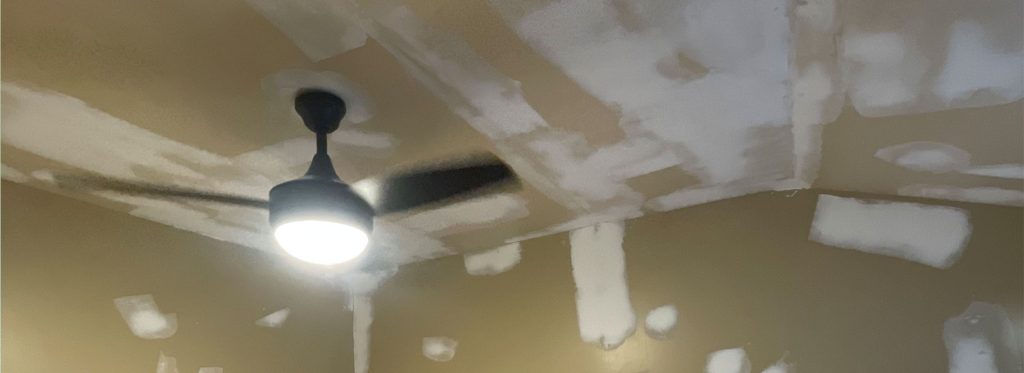
Drywall Repair & Installation Along the Connecticut Shoreline

When walls start showing their age, we fix what’s underneath before it becomes a bigger Problem.

Cracks that reappear after painting. Nail pops forming lines down your walls. Soft spots near windows or behind furniture. We see these patterns every week in homes around East Lyme, and they’re rarely just cosmetic.

Why Drywall Fails in Coastal Homes

Salt air and humidity stress drywall over time
Drywall is a gypsum core wrapped in paper, and that paper absorbs coastal moisture near Rocky Neck or along Route 1. As it swells and dries with the seasons, the board moves while joint compound moves differently. Over time, seams start to show and surfaces begin to crack.

Seasonal framing movement causes recurring corner cracks
Those small ceiling corner cracks that keep coming back are usually wood framing movement, not bad paint. Framing expands in humid summers and contracts in winter, while drywall can’t flex with it. The stress concentrates at seams and corners first, which is why tape lines and corner cracks appear.

Leaks and water damage destroy the drywall core
With leaks, the gypsum can soften and lose structure, and the damage often spreads beyond the visible stain. Painting over it can trap moisture and hide an active problem. In older homes around Flanders Four Corners, we’ve found wet areas extending well past what homeowners could see.

How We Approach Drywall Work

Finding the Real Problem

Before we cut anything out or start mudding, we figure out why the damage happened. A crack might be from settlement, a roof leak, or just poor installation twenty years ago. Popped fasteners usually mean someone used nails instead of screws, or the studs weren’t dry when the house was built. We’re looking for patterns because fixing the symptom without addressing the cause just means you’ll be calling someone again in a year.

Prep Work That Actually Matters

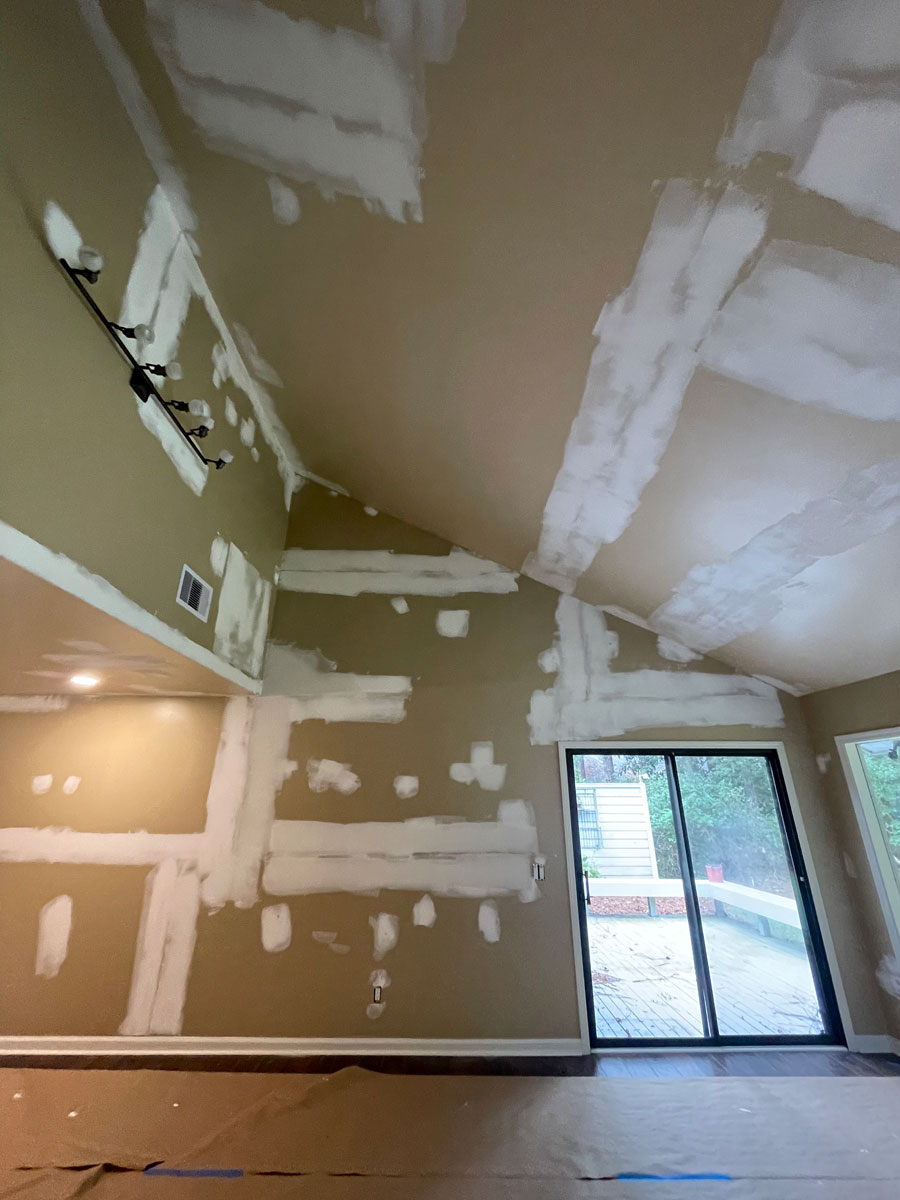
Most failed DIY repairs happen because people skip steps. We cut out damaged sections in clean lines back to solid framing. Any soft or water-damaged material gets removed completely—there’s no patching over compromised gypsum. If the paper face is torn or bubbling, we seal it with primer before applying any mud. Otherwise, the paper absorbs moisture from the compound and creates a weak bond that fails later.

Building It Back Right

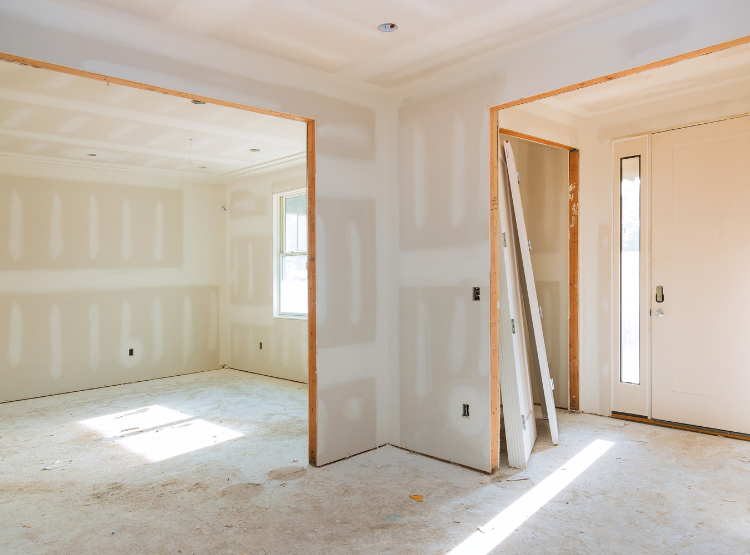
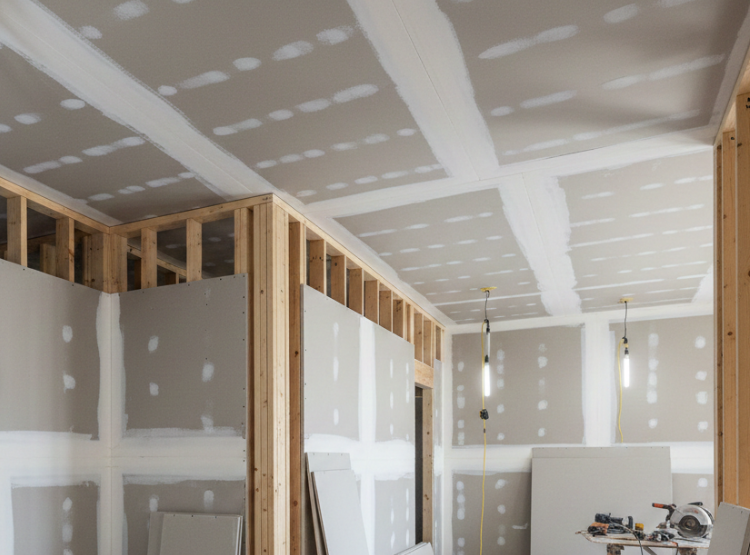
New drywall gets screwed, never nailed. Screws pull tight to the framing and stay there. We use moisture-resistant board in bathrooms and near any area that’s had water issues before. Joint compound goes on in thin coats—usually three minimum for seams, sometimes more. Each coat needs to dry completely, which in our coastal humidity means waiting a full day between applications, not the four hours some bags suggest.

Matching What’s Already There

Texture is where most people realize they need help. A smooth patch in a textured wall stands out under any light. We match existing texture whether it’s orange peel, knockdown, or smooth. On larger repairs, sometimes the only way to make it invisible is to skim coat the entire wall so everything has the same surface.

Call (860) 846-4005 if you need existing texture matched—it’s harder than it looks.

Our Services

Transforming Homes with Detail and Care

From flawless finishes to custom refinishing and wall design, every project we take on reflects our dedication to precision, beauty, and lasting craftsmanship.

Painting Services

Interior Painting Exterior Painting Cabinet & Vanity Refinishing Furniture Refinishing Popcorn Ceiling Removal

Special Services

Wallpaper Installation Drywall Repair & Installation Staining & Clearcoat Wainscoting & Feature Walls Custom Closet Shelving

Why Homeowners From Old Saybrook to Mystic Call Us

We match textures most contractors won’t touch.
From knockdown in a 1985 colonial to subtle orange peel in a raised ranch, we’ve matched them dozens of times. We build layers gradually and feather edges so the repair blends in, not stands out.

Our repairs last because we address what’s driving the damage.
Water repairs include locating and stopping the source, not just replacing drywall. Settlement cracks get reinforcement that allows for expected movement instead of reopening later.

We know shoreline homes and what they’re up against
We work across the Connecticut shoreline, from historic homes in Essex and Old Lyme to newer builds in Guilford and East Lyme. Textures vary by decade and builder, and coastal moisture affects how materials perform. That local experience helps us diagnose quickly and deliver repairs that last.

Material Choices That Hold Up Here

Not all joint compound is the same. Lightweight compound is easier to sand but shrinks more, so it’s not good for deep holes or thick applications. All-purpose compound is our standard for most repairs—it’s harder to sand but bonds better and shrinks less. For structural repairs or areas that need strength fast, we use setting compound that hardens chemically instead of drying by evaporation.

Paper tape is stronger than mesh tape, but it’s also harder to apply correctly. It needs to be bedded in compound with no air bubbles, and the edges have to be feathered perfectly or they’ll show through paint. Mesh tape is more forgiving for DIY work, but in high-movement areas like ceiling corners, it doesn’t have the strength to prevent cracks from coming back.

In coastal Connecticut, mold-resistant drywall matters. Purple board or newer mold-resistant products have additives in both the core and the paper face that prevent mold growth even when moisture gets in. We use it in bathrooms, near exterior walls that tend to condensate, and anywhere we’ve seen previous water damage. The salt air coming off Long Island Sound makes regular drywall paper deteriorate faster, so moisture-resistant products last longer near the water.

Primer is non-negotiable. Joint compound is porous and absorbs paint differently than the paper face of drywall. Without primer, you’ll see every patch as a dull spot where paint soaked in. We use PVA primer on new drywall and stain-blocking primer anywhere there’s been water damage, because even after the gypsum is replaced, tannins can bleed through and discolor fresh paint.

Proudly Serving the Heart of the Connecticut Shoreline

We proudly serve homeowners along the Connecticut Shoreline, bringing expert craftsmanship and refined finishes to every project we undertake. From meticulous interior painting to exterior transformations and custom refinishing, our team is trusted for precision, professionalism, and care that lasts.

Ready to Start Your Project?

Our Service Area

  • Old Saybrook
  • Essex
  • Westbrook
  • Clinton
  • Madison
  • Guilford
  • Niantic
  • East Lyme
  • Old Lyme
  • Mystic
  • Stonington
  • Groton

What Else Fails When Drywall Goes Bad

Once drywall starts deteriorating from moisture, the problem spreads in predictable ways. Water doesn’t stay put—it wicks along the bottom plate of the wall, soaks into insulation, and eventually finds wood framing. We’ve opened walls in homes near Niantic Bay where the studs were starting to rot because a slow leak went unnoticed for years. By the time you see a stain on the ceiling, the actual damage is usually three times larger than what’s visible.

Mold follows moisture. It grows behind drywall before you see it on the surface, and once it’s established in the wall cavity, cutting out the damaged section isn’t enough. The whole area needs treatment, sometimes with replacement of insulation and treatment of framing. The cost difference between fixing a six-inch water stain and dealing with mold remediation is significant, which is why we tell people not to ignore even small stains.

Electrical and plumbing problems get worse when drywall fails around them. A small crack near a light fixture might seem cosmetic until you realize it’s there because the electrical box wasn’t secured properly to framing. Cracks near plumbing penetrations usually mean movement or a hidden leak. We’ve pulled back ceilings where shower pan leaks had been dripping onto electrical for months. That’s not just a drywall problem anymore.

Insulation performance drops when walls are compromised. Air leaks through gaps and cracks, moisture gets into the wall cavity, and your heating and cooling costs go up. In older colonials around the Flanders area, we often find that once we open up a wall for a repair, the insulation behind it is either missing, compressed, or soaked. Fixing the drywall without addressing the insulation behind it is a missed opportunity.

When to Stop Trying to Fix It Yourself

This is one of those projects that looks simple until you’re three coats deep and the repair is still visible. The moment you realize you need help is usually when the patch keeps cracking, the texture doesn’t match, or the mud keeps shrinking no matter how many times you fill it.

If the damage is larger than six inches in any direction, patching becomes more complicated than replacing a section. You need to cut back to studs, secure new backing, and tape all four edges. Most people underestimate how much work goes into feathering edges so they’re invisible under paint.

Water damage always requires more work than it appears. If the drywall feels soft when you press on it, or if there’s any discoloration, the gypsum core is compromised. Mudding over it might look okay for a few weeks, but it’ll fail. And if you can’t identify where the water came from, fixing the drywall is pointless because it’ll just happen again.

Cracks that keep reappearing are telling you something. It might be foundation settlement, framing movement, or a structural issue that needs addressing before any drywall work will hold. We’ve seen people repair the same corner crack five times before finally calling us to figure out why it keeps coming back.

Call (860) 846-4005 when the problem won’t stay fixed—there’s usually something underneath that needs attention first.

Frequently Asked Questions

Small repairs can be done in a day if it’s just patching and mudding, but you’re looking at three to five days minimum for the compound to dry between coats. Larger repairs that involve cutting out sections and installing new board take longer, especially in our coastal humidity where drying times extend. We don’t rush the process because wet compound that’s painted over will fail.

Yes, but some textures are harder than others. Orange peel and knockdown are common and we can match them. Heavier textures or custom finishes sometimes require doing the whole wall to make everything consistent. We’ll tell you up front if matching is possible or if a larger skim coat makes more sense.

If the prep work is done right—proper priming, feathered edges, matched texture—the repair should disappear under paint. The times repairs stay visible are when compound isn’t primed, edges aren’t feathered far enough, or the wrong compound type was used. We prime everything before you paint so the surface is uniform.

Yes. Ceiling repairs are more involved because compound is fighting gravity and because ceilings show imperfections more than walls. Popcorn ceiling repairs are particularly difficult to match. If a ceiling has multiple repairs or water damage across a large area, sometimes removing the texture and going smooth makes more sense than trying to patch it.

It depends on the size and complexity. A simple patch might be a few hundred dollars. Water damage that requires cutting out sections, treating framing, and replacing insulation costs more. We give estimates after seeing what’s actually going on because what looks like a small problem on the surface can be more extensive once we open it up.

In coastal homes, yes. Purple board or green board costs a bit more but lasts longer in humid environments. If you’re doing any bathroom work or repairing water damage, we recommend moisture-resistant products. Salt air and bathroom humidity are hard on regular drywall paper.

Proudly Serving the Heart of the Connecticut Shoreline

We proudly serve homeowners along the Connecticut shoreline, delivering clean craftsmanship and lasting finishes on every drywall project. From water damage repairs to full installations and texture matching, we’re trusted across New London, Middlesex, and New Haven counties, including communities from Old Saybrook and Essex to Mystic and Branford.

Let’s Fix It Before It Spreads

Drywall problems don’t improve with time. Small cracks grow, water damage spreads, and what starts as a cosmetic issue becomes a structural one. We’ve been doing this work along the Connecticut shoreline long enough to know which repairs hold and which ones come back. If your walls are telling you something’s wrong, we’ll figure out what it is and fix it properly.

Get Quote

Ready to Bring Timeless Beauty to Your Home?

Tell us a bit about your project, and we’ll get back to you promptly to schedule an estimate

Name (Required)
=