
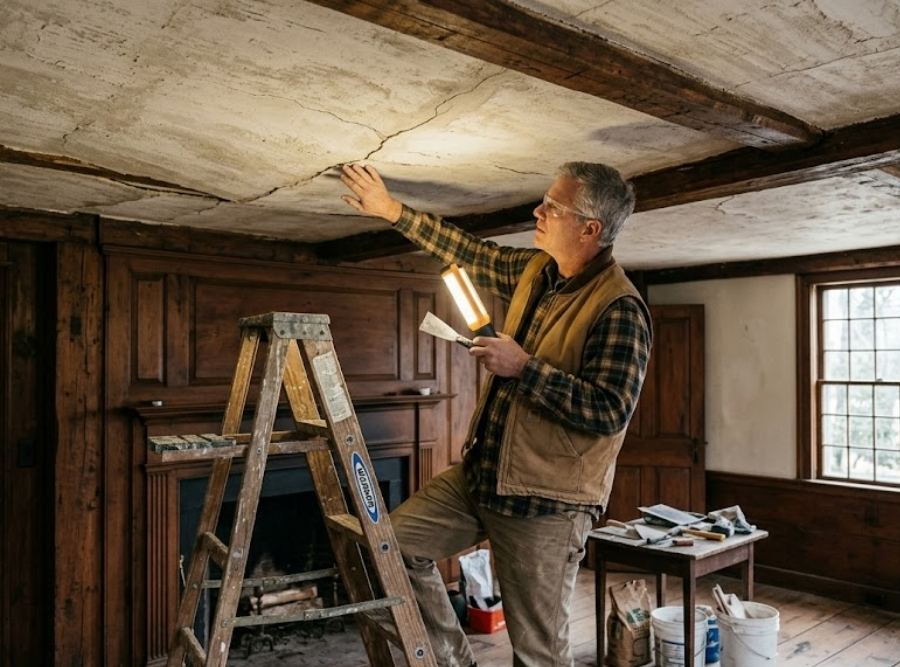
Why Do Plaster Ceilings Sag in Older New England Homes?
Plaster ceilings sag in older New England homes primarily because the wood lath strips behind the plaster lose their grip on the plaster “keys”, the small wedges of plaster that originally squeezed through gaps in the lath to lock the ceiling in place. Over decades, those keys can break from vibration, moisture exposure, or age, causing sections of plaster to separate from the lath and sag or fall. This is a common issue in historic homes throughout Connecticut’s shoreline communities, where original plaster ceilings are still common in homes built before drywall became standard construction material in the mid-20th century.
What’s Actually Holding a Plaster Ceiling Up?
Traditional plaster ceilings were built by nailing thin wood strips called lath across the ceiling joists, then applying wet plaster over the lath. As the plaster was pushed on, it squeezed through the small gaps between lath strips and formed little wedge shapes on the back side once it dried, these are called keys, and they’re what actually holds the entire plaster surface in place, rather than any adhesive bond to the lath itself.
This construction method worked well for generations, but it depends entirely on those keys staying intact. If they break, the plaster section they were holding loses its main point of attachment.
Why Do the Plaster Keys Break Down Over Time?
A few factors are typically responsible:
- Age and vibration: decades of foot traffic, door slamming, and general house settling can gradually snap the small, brittle plaster keys.
- Moisture exposure: water from roof leaks, plumbing issues, or high humidity can weaken plaster and cause keys to soften or crumble.
- Original construction quality: some keys were thinner or less consistent than others even when the ceiling was new, making certain sections more vulnerable than others.
- Nearby renovations: work involving the attic or floor above — new flooring, insulation, or plumbing — can create vibration or added weight that stresses already-aging keys.
Once enough keys in one area fail, that section of plaster no longer has adequate support and begins to sag, even though the plaster itself might still look intact from below.
What Are the Warning Signs of a Sagging Plaster Ceiling?
A sagging ceiling rarely happens without warning. Signs to watch for include:
- A visible dip, wave, or bulge in an otherwise flat ceiling
- Cracks radiating outward from one area, rather than a single straight line
- A hollow or spongy sound when lightly tapped
- Small pieces of plaster or dust appearing on the floor beneath the ceiling
- Visible separation where the ceiling meets the wall
Any of these signs suggest the plaster has lost enough of its structural connection to the lath that it’s at risk of a larger section failing.
Is a Sagging Plaster Ceiling Dangerous?
It can be. A section of plaster that’s lost its key attachment is essentially unsupported and held up mainly by the surrounding intact plaster and any paint or wallpaper layers. If enough of that support fails, a section can fall suddenly rather than gradually which is why a visibly sagging area shouldn’t be ignored or simply painted over. The underlying attachment issue doesn’t resolve on its own, and cosmetic coverage doesn’t restore structural support.
Can a Sagging Plaster Ceiling Be Repaired Without Full Replacement?
In many cases, yes. Depending on how extensive the key failure is, options typically include:
- Plaster washers: mechanically reattaching sagging plaster to the joists or lath above, which can stabilize sections without removing the original plaster.
- Patch repair: removing only the failed section and patching with new plaster or drywall matched to the surrounding texture.
- Full removal and replacement: necessary when key failure is widespread across the ceiling rather than isolated to one area.
The right approach depends on how much of the ceiling is actually affected and whether the remaining plaster is still soundly attached.
If you have an older home with a plaster ceiling showing cracks, sagging, or separation, the Simons Painting & Drywall team can evaluate the extent of the issue and recommend whether repair or replacement makes more sense.
Learn more on our Drywall Repair & Installation page.
Frequently Asked Questions About Sagging Plaster Ceilings
Why is my old plaster ceiling sagging in one specific spot?
A localized sag usually means the plaster “keys” — small wedges that hold the plaster to the wood lath behind it have broken in that particular area, often from age, vibration, or moisture, while the rest of the ceiling remains intact. It’s worth having that specific section evaluated rather than assuming the whole ceiling is failing.
Is it dangerous to leave a sagging plaster ceiling unrepaired?
It can be, since a sagging section has lost its main structural attachment and is being held up mainly by surrounding material, which means it can fail suddenly rather than gradually. It’s best to have it evaluated rather than simply painting over the area or ignoring it.
Can a sagging plaster ceiling be fixed without tearing out the whole ceiling?
Often, yes, plaster washers can mechanically reattach a sagging section to the framing above without removing the original plaster, or a smaller area can be patched if the failure is localized. Full replacement is typically only necessary when key failure is widespread across the ceiling rather than isolated.
Does moisture cause plaster ceilings to sag, or is it just old age?
Both can contribute — age and vibration alone can break down plaster keys over decades, but moisture from roof leaks, plumbing issues, or persistent humidity can accelerate that failure significantly. A ceiling with both age and a moisture source is often more likely to show sagging sooner.

Shea Simons is the owner of Simons Painting & Drywall, a family-owned painting and refinishing company serving Connecticut Shoreline communities from East Lyme and Niantic to Old Saybrook, Madison, and Mystic. Shea and his team specialize in interior and exterior painting, drywall repair and installation, and fine refinishing work for cabinets, furniture, and custom walls. Homeowners along the shoreline know Shea’s crew for meticulous prep work and a finish built to hold up against coastal salt air and humidity.