
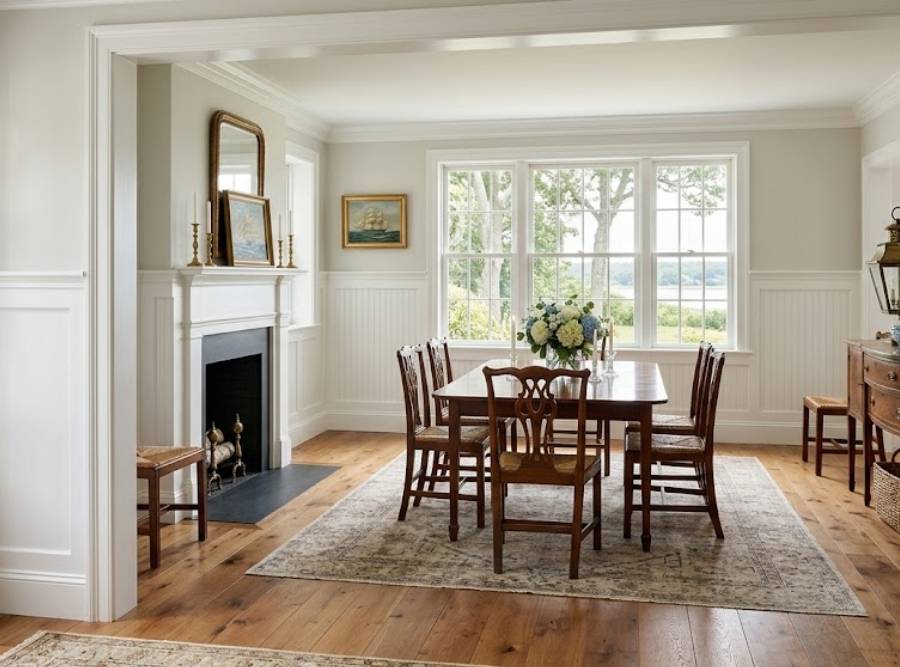
What Is Wainscoting and Is It Right for My Connecticut Shoreline Home?
Wainscoting is decorative wood paneling installed on the lower portion of an interior wall, typically from the floor to somewhere between waist and chair-rail height, used to add architectural detail, protect walls from everyday wear, and create a classic New England look that suits much of Connecticut’s coastal housing stock. It’s a strong fit for dining rooms, entryways, hallways, and other spaces where both durability and traditional style matter, though it’s not the right choice for every room or every home style.
What Exactly Is Wainscoting?
Wainscoting refers to any decorative wood paneling applied to the lower section of a wall, generally topped with a chair rail or similar trim piece that marks where the paneling ends and painted or wallpapered wall begins above it. It comes in several common styles:
- Raised panel wainscoting: traditional, dimensional panels often seen in Colonial and Federal-style homes, with a formal, classic look.
- Flat panel (shaker-style) wainscoting: simpler, cleaner lines with a more understated, versatile look that fits both traditional and more modern interiors.
- Board and batten: vertical boards with narrow strips (battens) covering the seams, giving a more casual, cottage-style or coastal look.
- Beadboard: narrow, vertical grooved panels, often associated with cottage or farmhouse styles and a common choice in coastal New England homes.
Why Does Wainscoting Suit Connecticut Shoreline Homes Specifically?
Connecticut’s shoreline towns have a strong concentration of Colonial, Federal, and cottage-style architecture, and wainscoting particularly beadboard and board and batten styles has long been associated with this regional aesthetic. Beyond style, wainscoting also serves a practical purpose in coastal homes: the lower portion of a wall is where most everyday wear happens — furniture bumps, foot traffic in hallways, chair backs in dining rooms and wood paneling holds up to that contact better than painted drywall alone. In homes near the water where humidity is already a factor, a well-sealed and properly finished wainscoting installation can also offer a bit more resilience in high-touch areas than paint by itself.
What Rooms Work Best With Wainscoting?
Wainscoting tends to perform well, both functionally and aesthetically, in:
- Dining rooms: chair backs and everyday use make the lower-wall protection genuinely useful, and the formal look suits a dining space well.
- Entryways and mudrooms: high-traffic zones where bags, umbrellas, and general contact wear down painted walls faster than in other rooms.
- Hallways: narrow spaces that see frequent contact benefit from the added durability, while the added architectural detail helps a plain hallway feel more finished.
- Powder rooms and bathrooms: beadboard wainscoting in particular handles bathroom humidity well when properly sealed, and it’s a classic look in coastal-style bathrooms.
- Stairways: the paneling can follow the stair angle for a cohesive, traditional look while protecting a wall that sees regular contact from bags, hands, and foot traffic.
Are There Rooms or Home Styles Where Wainscoting Doesn’t Make Sense?
Wainscoting can feel out of place in a few situations:
- Very modern or minimalist interiors: the traditional, dimensional look of most wainscoting styles can clash with a home that’s otherwise styled with clean, unadorned surfaces.
- Small rooms with low ceilings: wainscoting that’s too tall for the room can make the space feel more cramped rather than more detailed — proportions matter more here than in a larger room.
- Rooms with a lot of existing architectural detail: adding wainscoting to a room that already has significant molding, built-ins, or other trim work can start to feel busy rather than cohesive.
What Should You Consider Before Committing to Wainscoting?
A few practical questions help determine whether wainscoting is the right addition to a specific room:
- What’s the room’s primary use? High-contact rooms benefit more from the added durability than low-traffic formal spaces that don’t see much daily wear.
- What style is the rest of the home? Wainscoting generally reads best when it complements the home’s existing architectural character rather than fighting against it.
- What height makes sense for the room? Ceiling height and room proportions affect where the chair rail should sit — a height that works in one room can look off in another with different proportions.
- Is the wall material suited to installation? Existing wall condition matters, since wainscoting installed over a damaged or uneven wall will telegraph those imperfections once the paneling is up.
How Does Wainscoting Installation Actually Work?
A typical wainscoting installation includes:
- Measuring and planning the panel layout, chair rail height, and any corner or trim details
- Preparing the wall surface, including any needed repairs before installation
- Installing the panel material, whether prefabricated panels, board and batten strips, or beadboard
- Adding trim pieces — chair rail, baseboard, and corner trim to finish the transitions
- Priming and painting (or staining) the finished wainscoting to match the room’s design
Quality installation depends heavily on accurate measurement and level installation, since gaps or uneven lines are far more noticeable on a dimensional, paneled surface than they would be on a flat painted wall.
If you’re considering wainscoting for a room in your Old Lyme or coastal Connecticut home, the Simons Painting & Drywall team can help you decide on the right style, height, and room for your space.
Learn more on our Wainscoting & Feature Walls page, or see our Old Lyme location page.
Frequently Asked Questions About Wainscoting
What’s the difference between wainscoting and beadboard?
Beadboard is one specific style of wainscoting, characterized by narrow, vertical grooved panels often associated with cottage and coastal styles, while wainscoting is the broader category that also includes raised panel, flat panel, and board and batten styles. All of these sit on the lower portion of a wall, but they differ in look and how formal or casual they read.
Is wainscoting a good choice for a bathroom?
Yes, particularly beadboard wainscoting, which is a classic choice for bathrooms and handles humidity well when properly sealed and finished. It also adds a layer of protection to the lower wall in a room that sees regular moisture exposure.
How tall should wainscoting be in a room?
Height depends on the room’s ceiling height and proportions — a common range is roughly one-third of the wall height, though this can be adjusted based on the specific room. Wainscoting that’s too tall for a smaller room with lower ceilings can make the space feel more cramped rather than more detailed.
Does wainscoting work in a home with a more modern interior style?
It can, particularly with flat panel or shaker-style wainscoting, which has cleaner, simpler lines that fit more contemporary interiors better than traditional raised panel styles. More heavily dimensional, ornate wainscoting styles tend to suit traditional or Colonial-style homes better than minimalist modern interiors.

Shea Simons is the owner of Simons Painting & Drywall, a family-owned painting and refinishing company serving Connecticut Shoreline communities from East Lyme and Niantic to Old Saybrook, Madison, and Mystic. Shea and his team specialize in interior and exterior painting, drywall repair and installation, and fine refinishing work for cabinets, furniture, and custom walls. Homeowners along the shoreline know Shea’s crew for meticulous prep work and a finish built to hold up against coastal salt air and humidity.