How to Tell If Your Wallpaper Can Be Painted Over or Needs to Be Removed
Wallpaper can sometimes be painted over successfully if it’s fully adhered, in good condition, and has a paintable (non-vinyl, non-textured) surface but wallpaper that’s peeling, bubbling, heavily textured, vinyl-coated, or showing signs of moisture damage needs to be removed first. Painting over the wrong type of wallpaper doesn’t just look bad; it can trap moisture, cause the paper to bubble or peel away from the wall after the fact, and create a surface that never fully looks smooth no matter how many coats go on. In older Stonington homes especially, wallpaper condition and adhesive type vary widely, which makes checking before painting more important than assuming either approach will work.
What Makes Wallpaper a Reasonable Candidate for Painting Over?
A few conditions generally need to be true for painting directly over wallpaper to hold up:
- Fully adhered with no lifting edges: any loose seams or corners will telegraph through paint and tend to get worse over time rather than better.
- Smooth or lightly textured surface: heavily embossed, grasscloth, or textured wallpaper will show that texture through paint, and in some cases make an already busy pattern more visible rather than less.
- Non-vinyl surface: standard paper-based wallpaper generally accepts paint and primer more predictably than vinyl or vinyl-coated wallpaper, which resists adhesion.
- No signs of moisture damage: staining, discoloration, or a musty smell suggests moisture has already affected the paper or the wall behind it, which painting over won’t resolve.
- No dramatic pattern or dark color showing through: bold patterns or dark colors can bleed through lighter paint without significant priming, sometimes requiring more coats than expected to fully hide.
How Can You Tell If Your Wallpaper Is Vinyl or Vinyl-Coated?
Vinyl and vinyl-coated wallpapers are among the most common types that don’t take paint well, and a few checks can help identify them:
- Feel test: vinyl wallpaper often has a slightly plastic, smooth, and somewhat cool feel compared to the more porous, paper-like texture of traditional wallpaper.
- Water test on a hidden section: dab a small amount of water on an inconspicuous spot — if it beads up rather than absorbing, that suggests a vinyl or vinyl-coated surface.
- Age and origin: wallpaper installed from the 1970s through the 1990s in many American homes, including many older Stonington properties, is more likely to be vinyl or vinyl-coated than paper-based patterns common in earlier or more recent decades.
What Are the Warning Signs That Wallpaper Should Be Removed, Not Painted Over?
A few signs point clearly toward removal rather than painting:
- Peeling, lifting, or bubbling at seams, corners, or edges
- Visible mold, mildew, or discoloration suggesting past or ongoing moisture exposure
- A musty smell in the room that doesn’t resolve with ventilation
- Heavily embossed or textured paper that would show through paint in a way that undermines a clean finish
- Multiple layers of wallpaper applied over each other, since painting over layered paper compounds the risk of one layer separating from another later
- Any softness or give when pressed, which suggests moisture damage to the wall or paper backing underneath
Why Is This Especially Relevant in Older Stonington Homes?
Older homes throughout Stonington often have wallpaper installed decades ago, sometimes in multiple layers as styles changed over the years, and original plaster walls that behave differently than modern drywall when it comes to adhesive bonding and moisture. Coastal humidity adds another factor — wallpaper adhesive and paper backing in a humid coastal climate can degrade differently than the same material in a drier inland location, which makes a careful condition check more important here than it might be elsewhere.
What Happens If You Paint Over Wallpaper That Should Have Been Removed?
Painting over wallpaper in poor condition typically leads to one or more of the following:
- Bubbling or peeling as trapped moisture or existing lifted seams worsen under the added weight and moisture of wet paint
- Visible texture or pattern telegraphing through the paint, undermining a smooth, finished look
- A rougher overall finish that never quite achieves the clean look of painting directly on a properly prepared wall
- The need to eventually remove both the wallpaper and the paint on top of it, which is more labor-intensive than removing wallpaper alone would have been
What Does Proper Wallpaper Removal Involve, When That’s the Right Call?
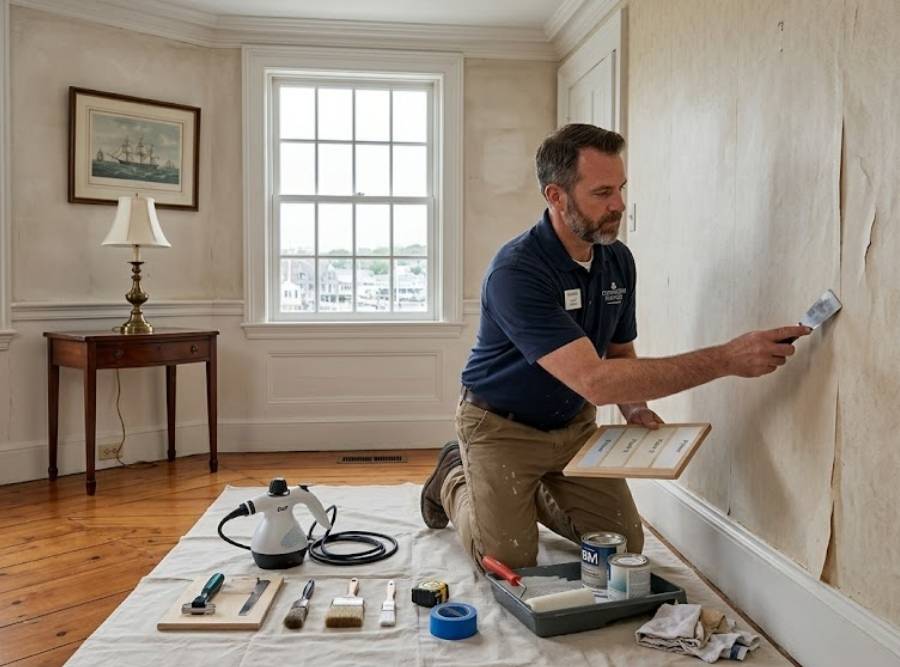
When wallpaper needs to come down before painting, the process typically includes:
- Scoring the wallpaper surface to allow removal solution or steam to penetrate
- Applying a wallpaper removal solution or steamer to loosen the adhesive
- Carefully peeling away the paper and backing without damaging the underlying wall
- Cleaning any remaining adhesive residue from the wall surface
- Repairing any damage to the wall — plaster or drywall revealed once the wallpaper is removed
- Priming the bare wall before painting, since freshly exposed plaster or drywall often needs sealing before paint will adhere evenly
Removal is more labor-intensive than painting over compliant wallpaper, but it’s the more reliable path when wallpaper doesn’t meet the conditions for painting over successfully.
How Do You Decide Which Approach Is Right for Your Specific Wall?
The safest approach is checking the wallpaper’s condition, material, and adhesion against the criteria above before committing to either option. When in doubt, a small test patch — painting a discreet section and observing it over a few days can reveal adhesion or bleed-through issues before committing to an entire room.
If you’re not sure whether your Stonington home’s wallpaper can be painted over or needs to be removed, the Simons Painting & Drywall team can assess the material and condition and recommend the right approach.
Learn more on our Wallpaper Installation page, or see our Stonington location page.
Frequently Asked Questions About Painting Over Wallpaper
Can you paint directly over any type of wallpaper?
No, painting over wallpaper only works reliably when the paper is fully adhered, in good condition, non-vinyl, and free of moisture damage. Vinyl-coated, textured, peeling, or moisture-damaged wallpaper generally needs to be removed first, since painting over it tends to trap problems rather than solve them.
How do I know if my wallpaper is vinyl or paper-based?
A vinyl wallpaper typically feels smoother and slightly plastic compared to the more porous feel of paper-based wallpaper, and a small water test on a hidden section will bead up on vinyl rather than absorbing. Wallpaper installed from the 1970s through the 1990s is more likely to be vinyl or vinyl-coated than older or more recent styles.
What happens if I paint over wallpaper that should have been removed?
Painting over wallpaper in poor condition commonly leads to bubbling, peeling, or visible texture and pattern showing through the new paint, and any pre-existing moisture or adhesion problems tend to get worse rather than better under the added weight of wet paint. In many cases, both the wallpaper and the paint on top eventually need to be removed together.
Shea Simons is the owner of Simons Painting & Drywall, a family-owned painting and refinishing company serving Connecticut Shoreline communities from East Lyme and Niantic to Old Saybrook, Madison, and Mystic. Shea and his team specialize in interior and exterior painting, drywall repair and installation, and fine refinishing work for cabinets, furniture, and custom walls. Homeowners along the shoreline know Shea’s crew for meticulous prep work and a finish built to hold up against coastal salt air and humidity.