
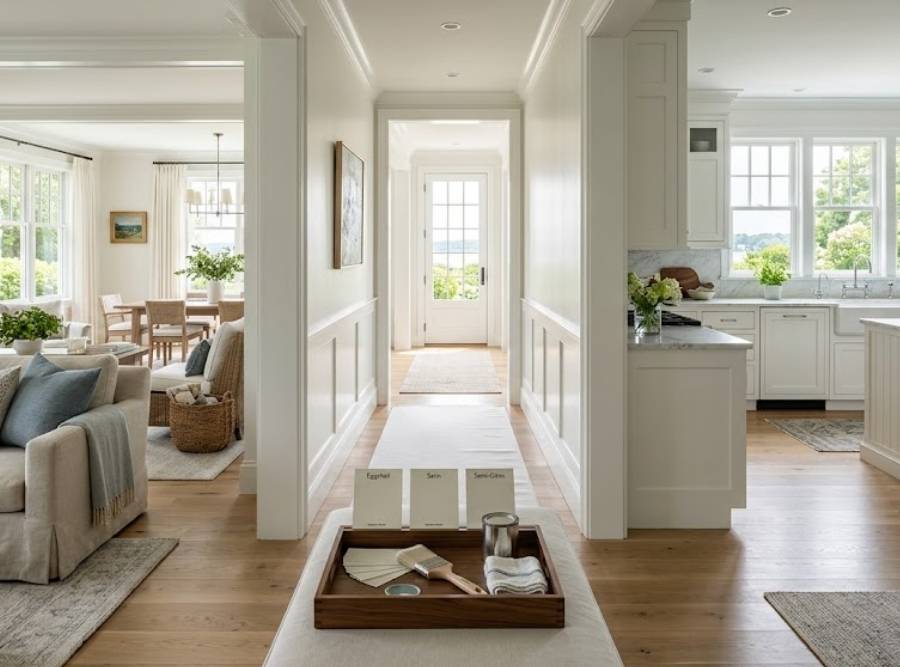
How to Choose Between Eggshell, Satin, and Semi-Gloss for Each Room
Eggshell works best for living rooms and bedrooms where a soft, low-glare finish is the priority; satin is the more versatile middle ground for hallways, kids’ rooms, and family rooms that need some washability; and semi-gloss is the right call for kitchens, bathrooms, and trim, where moisture resistance and easy cleaning matter most. The general rule is that sheen and durability increase together — the glossier the finish, the more it resists moisture and cleans up more easily, but it also shows more surface imperfections and reflects more light.
What’s the Actual Difference Between Eggshell, Satin, and Semi-Gloss?
These three sheens sit on a spectrum, and understanding where each falls explains why they suit different rooms:
| Sheen | Gloss Level | Durability & Cleanability | Look |
|---|---|---|---|
| Eggshell | Low — subtle, soft glow | Moderate; wipeable but not scrub-resistant | Smooth, understated, hides minor wall imperfections well |
| Satin | Medium — soft sheen visible from an angle | Good; more washable than eggshell | Slightly more reflective, holds up to moderate handling |
| Semi-Gloss | High — noticeably shiny | Very good; resists moisture and scrubs clean easily | Reflective, highlights trim and architectural detail, but also highlights wall flaws |
As a general pattern: the higher the gloss, the more durable and moisture-resistant the finish, but the more it reveals surface imperfections like patched areas, uneven texture, or minor dents.
When Should You Choose Eggshell?
Eggshell is generally the best fit for:
- Living rooms and formal dining rooms, where a soft, elegant look matters more than heavy-duty washability
- Bedrooms, which see lower daily wear and benefit from the subtler, non-reflective finish
- Ceilings in most rooms, where a flat-to-eggshell finish minimizes glare and hides minor imperfections in the drywall or plaster
Eggshell isn’t the strongest choice for rooms that need frequent wiping down or that deal with a lot of moisture, since its lower gloss level offers less resistance to both than satin or semi-gloss.
When Should You Choose Satin?
Satin is often the practical middle ground, making it a strong choice for:
- Hallways and entryways, which see regular contact and benefit from being easier to wipe clean than eggshell
- Kids’ bedrooms and playrooms, where marks and scuffs are more likely and washability matters more than in a formal living space
- Family rooms and home offices, spaces with moderate daily use that don’t need the heavy-duty resistance of semi-gloss
Satin holds up to more frequent cleaning than eggshell while still keeping a relatively soft look rather than the more obviously shiny appearance of semi-gloss.
When Should You Choose Semi-Gloss?
Semi-gloss is generally the right call for:
- Kitchens, where grease, moisture, and frequent cleaning make a wipeable, moisture-resistant surface important
- Bathrooms, where humidity and condensation call for a finish that resists moisture better than lower-sheen options
- Trim, doors, and window casings throughout the home, since semi-gloss holds up to the repeated contact these surfaces get and helps define architectural lines against a lower-sheen wall color
The tradeoff with semi-gloss is that its higher reflectivity makes surface imperfections — dents, patched areas, uneven texture — more visible, so walls getting a semi-gloss finish typically need more careful surface prep beforehand than a lower-sheen room would.
Does Coastal Humidity in Connecticut Change This Decision?
Somewhat, particularly for rooms already prone to moisture exposure. In coastal Connecticut homes, bathrooms, kitchens, laundry rooms, and mudrooms benefit from leaning toward satin or semi-gloss more consistently than they might in a drier inland climate, since these finishes handle repeated humidity exposure and condensation better than eggshell. Rooms with less humidity exposure — bedrooms, living rooms, formal spaces — don’t need this adjustment and can stick with the sheen that suits their look and use rather than their moisture exposure.
Does Sheen Choice Affect How a Room’s Color Actually Looks?
Yes. Higher sheen finishes reflect more light, which can make a color appear slightly different than the same color in a lower sheen — semi-gloss trim in the same color as an eggshell wall will typically look a bit brighter or more saturated due to the difference in light reflection. This is worth keeping in mind when choosing coordinating sheens for walls and trim in the same room, since the color may need a small adjustment to read as intended once applied in a different finish.
How Do You Decide When a Room Doesn’t Fit Neatly Into One Category?
For rooms that see a mix of uses — a combination mudroom/laundry space, for example, or an open-concept kitchen and living area, it’s reasonable to lean toward the higher-durability sheen for the space overall, or to use different sheens for different zones within an open layout if there’s a clear break point, like a change in wall or an archway. The goal is matching the finish to how the room is actually used day to day, not just its official room type.
If you’re not sure which sheen makes sense for a specific room in your Connecticut Shoreline home, the Simons Painting & Drywall team can walk through your space and recommend the right finish for each room’s use and moisture exposure.
Learn more on our Interior Painting page, or visit our homepage to see our full range of services.
Frequently Asked Questions About Choosing Paint Sheen
What paint sheen is best for a kitchen?
Semi-gloss is generally the best choice for kitchens, since it resists grease, moisture, and frequent cleaning better than lower-sheen finishes. Some homeowners choose satin for kitchen walls with semi-gloss reserved for trim and cabinetry, which balances washability with a slightly softer overall look.
Is eggshell or satin better for a hallway?
Satin is usually the better choice for hallways, since these spaces see regular contact from foot traffic and benefit from being easier to wipe clean than eggshell allows. Eggshell is better suited to lower-traffic rooms like formal living rooms or bedrooms.
Does a glossier paint finish really show wall imperfections more than a flatter one?
Yes, higher sheen finishes reflect more light, which makes dents, patches, and uneven texture more visible than they would be under a lower-sheen finish like eggshell. Rooms getting a semi-gloss finish typically benefit from more careful surface prep beforehand for this reason.
Should bathrooms in coastal Connecticut homes always use semi-gloss?
Semi-gloss or satin is generally a better fit than eggshell for bathrooms, especially in coastal Connecticut homes where humidity adds to the moisture a bathroom already deals with day to day. Semi-gloss offers the most moisture resistance, while satin is a reasonable middle ground if a slightly softer look is preferred.

Shea Simons is the owner of Simons Painting & Drywall, a family-owned painting and refinishing company serving Connecticut Shoreline communities from East Lyme and Niantic to Old Saybrook, Madison, and Mystic. Shea and his team specialize in interior and exterior painting, drywall repair and installation, and fine refinishing work for cabinets, furniture, and custom walls. Homeowners along the shoreline know Shea’s crew for meticulous prep work and a finish built to hold up against coastal salt air and humidity.