
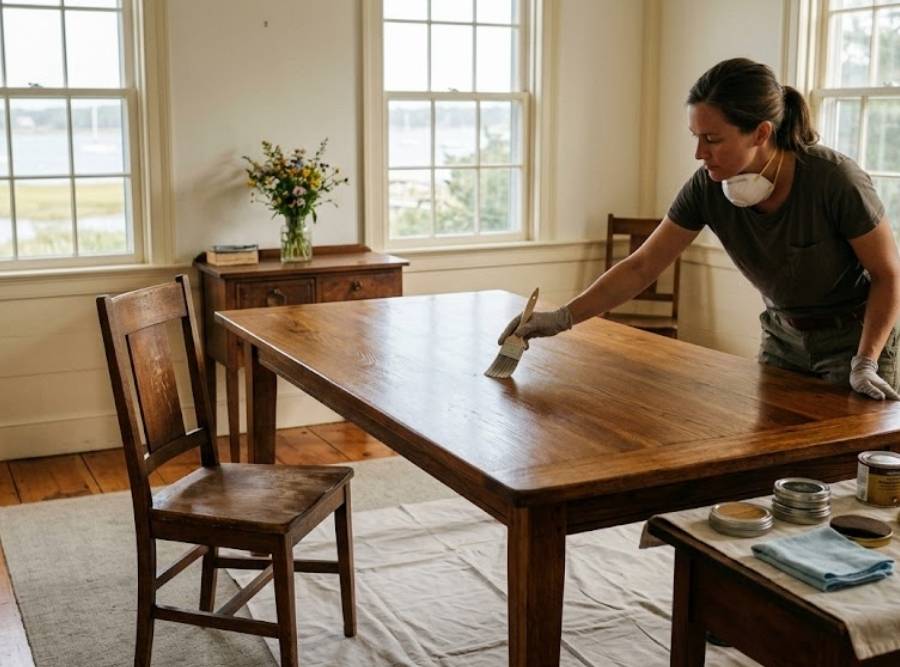
What Does Furniture Refinishing Cost vs. Buying New Furniture?
Professional furniture refinishing typically costs $150 to $1,500 per piece, with a national average around $600 to $800, compared to the cost of buying comparable new solid-wood furniture, which often runs several hundred to several thousand dollars more depending on quality. Refinishing generally costs 30% to 70% less than replacing a piece with new furniture of similar quality, the tradeoff is that refinishing only makes financial sense when the underlying piece is structurally sound and made from real wood worth preserving.
What Does Furniture Refinishing Typically Cost?
Refinishing costs vary by piece type, size, and condition:
| Item | Typical Cost Range |
|---|---|
| Dining chair | $100–$400 |
| Dresser | $300–$800 |
| Dining table | $500–$1,200 |
| Bed frame | $350–$2,000 |
| Antique or detailed pieces | 20–50% more than a comparable standard piece |
Labor typically makes up the majority of the cost often 80% or more of the total since the process involves careful stripping, sanding, and multiple coats of finish rather than significant material expense. Pieces with intricate detail, multiple layers of old finish, or antique status generally cost more due to the additional time required, even if the piece itself is small.
How Does That Compare to Buying New Furniture?
Refinishing typically runs 30% to 70% less than buying comparable new furniture, particularly when comparing against solid-wood, well-made pieces rather than budget or veneer options. A quality wood dining table, for example, might cost $500 to $1,200 to refinish versus $1,500 to $4,000 or more to replace with a similar solid-wood piece new. The gap narrows somewhat when comparing refinishing against lower-cost, mass-produced new furniture, since a basic new piece can sometimes cost less than an involved refinishing job which is part of why the decision depends on the specific piece rather than a blanket rule.
When Does Refinishing Make More Financial Sense Than Replacing?
Refinishing is generally the better financial choice when:
- The piece is solid wood construction, since refinishing works well on real wood but not on veneer, particle board, or laminate furniture
- The frame and structure are sound — refinishing addresses the surface finish, not structural damage
- The piece has sentimental value, is an antique, or is otherwise not easily or affordably replaced with something comparable
- You want to preserve a specific style or craftsmanship quality that’s difficult to find in current furniture at a similar price point
When Does Buying New Make More Sense, Despite the Higher Cost?
Buying new tends to be the more practical choice when:
- The piece has significant structural damage — broken legs, unstable joints, or major frame issues — since repair costs can add up before refinishing even begins
- The furniture is veneer, particle board, or another material that doesn’t respond well to sanding and refinishing
- You want a different style, size, or function than what the existing piece offers
- The refinishing cost estimate approaches or exceeds what a comparable new piece would cost
A helpful gut-check: if a piece needs both structural repair and refinishing, it’s worth pricing both together before deciding, since combined repair-and-refinish costs can sometimes approach the cost of a comparable new piece.
What Factors Affect the Final Refinishing Cost for a Specific Piece?
A few variables tend to move the price up or down for any individual project:
- Extent of damage or wear: surface scratches and minor staining cost less to address than widespread finish failure requiring full stripping.
- Size of the piece: larger furniture — dining tables, dressers, bed frames — naturally takes more time and material than a single chair.
- Detail and complexity: carved details, multiple panels, or intricate joinery add labor time beyond a simple flat surface.
- Finish type requested: specialty stains, antique-matching colors, or multiple coats for durability can add to the base cost.
- Structural repairs needed first: loose joints, broken pieces, or other structural issues typically need addressing before refinishing, adding to the total project cost.
Is Refinishing Worth It for a Piece That Isn’t an Antique?
Often, yes, refinishing isn’t limited to antiques or heirloom pieces. A solid-wood dresser, table, or cabinet in otherwise good structural condition can be a strong refinishing candidate purely because it’s well-made furniture, regardless of its age or sentimental value. The deciding factor is construction quality and structural soundness, not whether the piece has a family history attached to it.
If you have a piece of furniture in your Mystic home and aren’t sure whether refinishing or replacement makes more sense, the Simons Painting & Drywall team can assess the piece and give you an honest recommendation.
Learn more on our Furniture Refinishing page, or see our Mystic location page.
Frequently Asked Questions About Furniture Refinishing Costs
Is furniture refinishing actually cheaper than buying new furniture?
Usually, yes, refinishing typically costs 30% to 70% less than buying comparable new solid-wood furniture, though the gap narrows when compared against lower-cost, mass-produced new pieces. The savings are most significant when comparing against quality, well-made new furniture rather than budget options.
How much does it typically cost to refinish a piece of furniture?
Costs vary by piece type and size — a dining chair might run $100 to $400, while a dresser or dining table can run $300 to $1,200 depending on condition, size, and detail. Antique or heavily detailed pieces typically cost 20% to 50% more than a comparable standard piece.
Is it ever cheaper to just buy new furniture instead of refinishing?
Sometimes, if a piece has significant structural damage, is made from veneer or particle board rather than solid wood, or if the refinishing estimate approaches the cost of a comparable new piece, buying new can be the more practical choice. It’s worth getting a refinishing estimate before assuming either option is automatically cheaper.
Does furniture need to be an antique to be worth refinishing?
No, any solid-wood piece in structurally sound condition can be a good refinishing candidate, regardless of its age. The deciding factor is the quality and condition of the underlying construction, not sentimental or antique value.

Shea Simons is the owner of Simons Painting & Drywall, a family-owned painting and refinishing company serving Connecticut Shoreline communities from East Lyme and Niantic to Old Saybrook, Madison, and Mystic. Shea and his team specialize in interior and exterior painting, drywall repair and installation, and fine refinishing work for cabinets, furniture, and custom walls. Homeowners along the shoreline know Shea’s crew for meticulous prep work and a finish built to hold up against coastal salt air and humidity.