
Cabinet Refinishing vs. Cabinet Replacement — What Makes Financial Sense?
Cabinet refinishing typically costs $1,500 to $5,500 for an average kitchen, compared to $15,000 to $40,000 or more for a full cabinet replacement — refinishing is usually the better financial choice when the existing cabinet boxes are structurally sound and you’re happy with the current layout. Replacement makes more sense when cabinets are damaged, the layout no longer works for how you use the kitchen, or you want a different style of door and drawer construction entirely. The right call depends more on the condition and layout of what you already have than on price alone.
What’s the Real Cost Difference Between Refinishing and Replacing?
The cost gap between these two options is significant:
| Option | Typical Cost Range | What’s Involved |
|---|---|---|
| Refinishing (paint or stain existing cabinets) | $1,500–$5,500 for an average kitchen | Cleaning, sanding, priming, new paint or stain on existing doors and boxes |
| Refacing (new door/drawer fronts, existing boxes) | $4,000–$9,500 | New veneer or replacement door and drawer fronts over the original cabinet boxes |
| Full replacement | $15,000–$40,000+ | Entirely new cabinet boxes, doors, and hardware, often with related work like countertops and flooring |
These are general industry ranges — actual cost depends on kitchen size, cabinet material, and the scope of work, so an in-home assessment is the only way to get an accurate number for a specific project.
When Does Refinishing Make the Most Financial Sense?
Refinishing is generally the strongest financial choice when:
- The existing cabinet boxes are structurally sound — no water damage, warping, or falling-apart joinery
- You’re satisfied with the current kitchen layout and don’t need to reconfigure cabinet placement
- The cabinets are solid wood or a paintable material, since refinishing works best on surfaces that can be properly sanded and primed
- The goal is a cosmetic update — a new color or finish — rather than a functional change
A professionally refinished cabinet with a quality finish can last 8 to 15 years, which makes the cost-per-year value of refinishing considerably better than replacement in situations where the underlying cabinets don’t actually need to change.
When Does Replacement Actually Make More Sense, Despite the Higher Cost?
Replacement is worth the added cost when:
- Cabinet boxes have water damage, warping, or structural issues that refinishing can’t fix
- You want to change the kitchen’s layout — different cabinet placement, more storage, or a different configuration
- You want features refinishing can’t provide, like soft-close drawers, different box materials, or a completely different door style
- The cabinets are a material that doesn’t refinish well, such as certain laminates or thermofoil
Refinishing a structurally compromised cabinet box is usually a short-term fix — if the underlying problem isn’t addressed, it tends to resurface regardless of how good the new paint or stain looks.
Does Refinishing Actually Add Home Value, or Is It Just Cosmetic?
Refinishing tends to perform well on return relative to its cost — industry estimates commonly cite refinishing recouping a meaningfully higher percentage of its cost at resale compared to full replacement, since buyers often respond to updated, well-maintained cabinets without needing them to be brand new. That said, “value” here is directional rather than a precise number for any specific home — a kitchen’s overall condition and the rest of the home’s finishes affect how much any single update actually contributes to resale value.
What Does a Professional Cabinet Refinishing Process Actually Involve?
A properly done refinishing project typically includes:
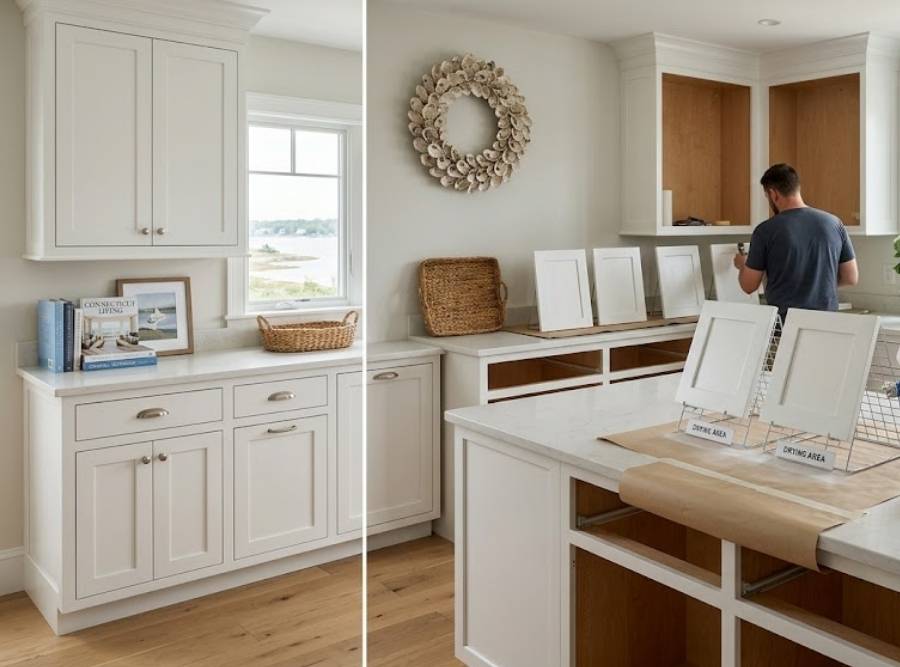
- Removing doors, drawers, and hardware, and labeling them for reinstallation
- Thorough cleaning and degreasing, since kitchen cabinets accumulate cooking residue that affects paint adhesion
- Sanding to remove the existing finish and create a surface the primer can bond to
- Applying a stain-blocking primer, especially important over darker existing finishes
- Two to three coats of a durable, cabinet-grade paint or a stain and topcoat system
- Reinstalling doors, drawers, and hardware, with touch-ups as needed
Skipping steps here particularly degreasing and priming is a common reason a DIY or rushed cabinet refinish starts chipping or peeling within a year, even when the paint itself is good quality.
How Do You Decide Which Option Is Right for Your Niantic Kitchen?
The most reliable starting point is an honest assessment of your current cabinets’ structural condition, separate from how they look cosmetically. Cabinets that are structurally sound but visually dated are strong refinishing candidates. Cabinets with water damage, sagging, or a layout that genuinely doesn’t work for your kitchen are better candidates for replacement, even at the higher cost, since refinishing won’t solve those underlying issues.
If you’re weighing cabinet refinishing against replacement for your Niantic home, the Simons Painting & Drywall team can assess your existing cabinets and help you figure out which option actually makes sense for your kitchen.
Learn more on our Cabinet & Vanity Refinishing page, or see our Niantic location page.
Frequently Asked Questions About Cabinet Refinishing vs. Replacement
Is cabinet refinishing actually cheaper than replacement, or does it just look that way upfront?
Refinishing is genuinely less expensive both upfront and often per year of expected use — typically $1,500 to $5,500 versus $15,000 to $40,000+ for full replacement — as long as the existing cabinet boxes are structurally sound. If the boxes are damaged, refinishing may need to be repeated sooner or won’t solve the underlying problem, which changes the cost comparison.
How do I know if my cabinets are good candidates for refinishing instead of replacement?
Cabinets are generally good refinishing candidates if the boxes are solid, free of water damage or warping, and you’re happy with the current layout — the update is purely cosmetic. If there’s structural damage or you want a different configuration, replacement is usually the better long-term choice despite the higher cost.
How long does a professional cabinet refinish actually last?
A professionally refinished cabinet with a quality primer and finish typically lasts 8 to 15 years, depending on kitchen usage and the specific products used. This is comparable to or better than the lifespan many homeowners get from budget replacement cabinets.
Does refinishing cabinets increase home value as much as replacing them?
Refinishing tends to return a strong percentage of its cost at resale, often cited as higher than full replacement’s return rate, since buyers generally respond well to clean, updated cabinets without requiring them to be brand new. The exact value impact varies by home and market conditions.

Shea Simons is the owner of Simons Painting & Drywall, a family-owned painting and refinishing company serving Connecticut Shoreline communities from East Lyme and Niantic to Old Saybrook, Madison, and Mystic. Shea and his team specialize in interior and exterior painting, drywall repair and installation, and fine refinishing work for cabinets, furniture, and custom walls. Homeowners along the shoreline know Shea’s crew for meticulous prep work and a finish built to hold up against coastal salt air and humidity.