
The Best Wallpaper Installation Services on the Connecticut Shoreline
Wallpaper requires the kind of precision that reveals itself in the details most people only notice when they’re wrong — a pattern that drifts by a quarter inch across a wall, a seam that catches light, a bubble behind grasscloth that shifts every time someone passes. At Simons Painting & Drywall, wallpaper installation is approached with the same discipline we bring to every other finished surface in the home: the prep matters as much as the application, and the result should look like it was always there. Call Simons Painting & Drywall at (860) 846-4005 to schedule your estimate.
Why Wallpaper Installation Requires Professional Execution
Premium wallpaper — grasscloth, textured linen, designer prints, murals — is expensive material. A misaligned pattern or a bubbled application ruins both the wall and the material, often permanently.
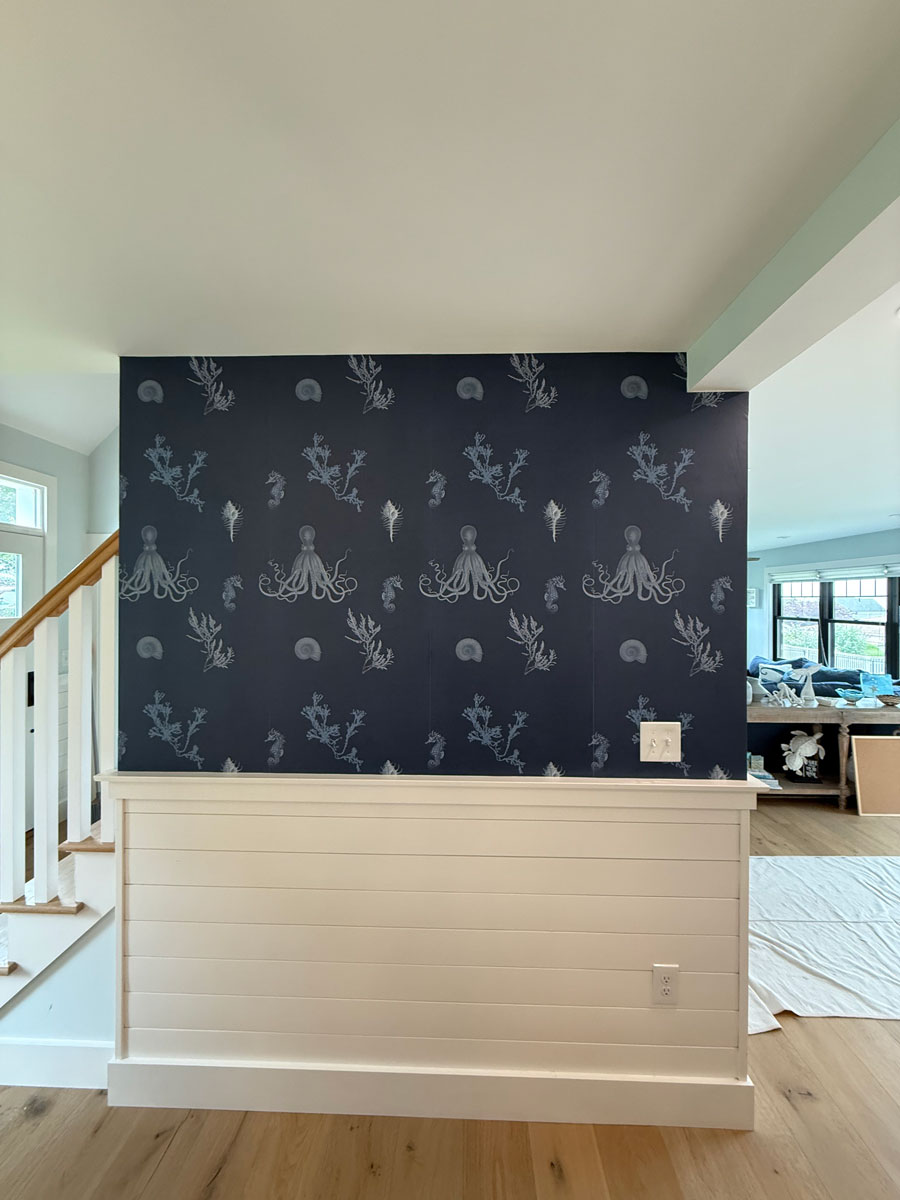
Professional installation is not about having a special technique so much as having the patience to do the preparation correctly: walls must be perfectly primed and smooth, adhesive must be selected for the specific paper type, pattern matching must be planned before the first drop is hung, and the paper must be positioned without trapping air or moisture.
Preparation Is What Most Installers Skip
Wallpaper applied to an unprimed or uneven wall is the most common reason residential wallpaper fails. Paint seams, texture variation, and wall damage show through even heavy papers. We assess and prepare every wall surface before installation begins — repairing damage, skim coating if needed, and applying the correct primer for the paper type. For grasscloth and natural fiber papers, wall prep is critical because any surface imperfection reads through the material. On smooth designer prints, an uneven surface shows every flaw.
What We Install
Simons Drywall & Painting Service Areas – Connecticut Shoreline
Frequently Asked Questions About Wallpaper Installation on the Connecticut Shoreline
Can you remove existing wallpaper before installing new?
Yes. Wallpaper removal is part of our scope and is often necessary before new paper can be installed correctly. Existing paper must be fully removed — papering over old wallpaper creates adhesion problems and shows the seams of the layer beneath. Removal can be straightforward on newer construction or time-consuming on older Connecticut Shoreline homes where paper was applied directly to plaster without a proper primer barrier.
How do I know how much wallpaper to order for a room?
We provide a materials estimate as part of our pre-installation assessment — we measure the room, account for window and door openings, calculate the pattern repeat, and give you an accurate quantity including waste allowance. Ordering too little mid-project is the most common way a wallpaper installation gets delayed or derailed. We help you get the quantity right before the paper is ordered.
Can you install grasscloth in a bathroom or high-humidity area?
Grasscloth and natural fiber wallcoverings are not well-suited to bathrooms or any space with regular steam or moisture exposure. Natural fibers absorb moisture, which causes warping, separation at seams, and mildew growth. In bathrooms, we recommend vinyl or vinyl-coated papers that are specifically rated for wet areas. We advise honestly on material selection before any installation in a moisture-prone space.
What if the walls in my Connecticut Shoreline home aren’t perfectly smooth?
Most older Connecticut Shoreline homes have walls that are not perfectly smooth — plaster walls with hairline cracks, drywall with visible seams, texture that was never fully removed. We skim coat or prepare the surface to the level required for the specific wallpaper being installed. Heavier textured papers can tolerate minor surface variation. Smooth papers and murals require a nearly perfect substrate. We assess and advise before pricing.
How do you handle pattern matching around corners, windows, and doors?
Pattern matching is planned before installation begins — we calculate the starting point of the first drop based on the room’s most visible wall and the pattern repeat, so the most prominent areas read correctly. Corners require precise measurement and overlap technique to maintain pattern continuity. Windows and doors are cut with clean, straight lines. Mismatched patterns at corners or above windows are the mark of an installation done without planning.
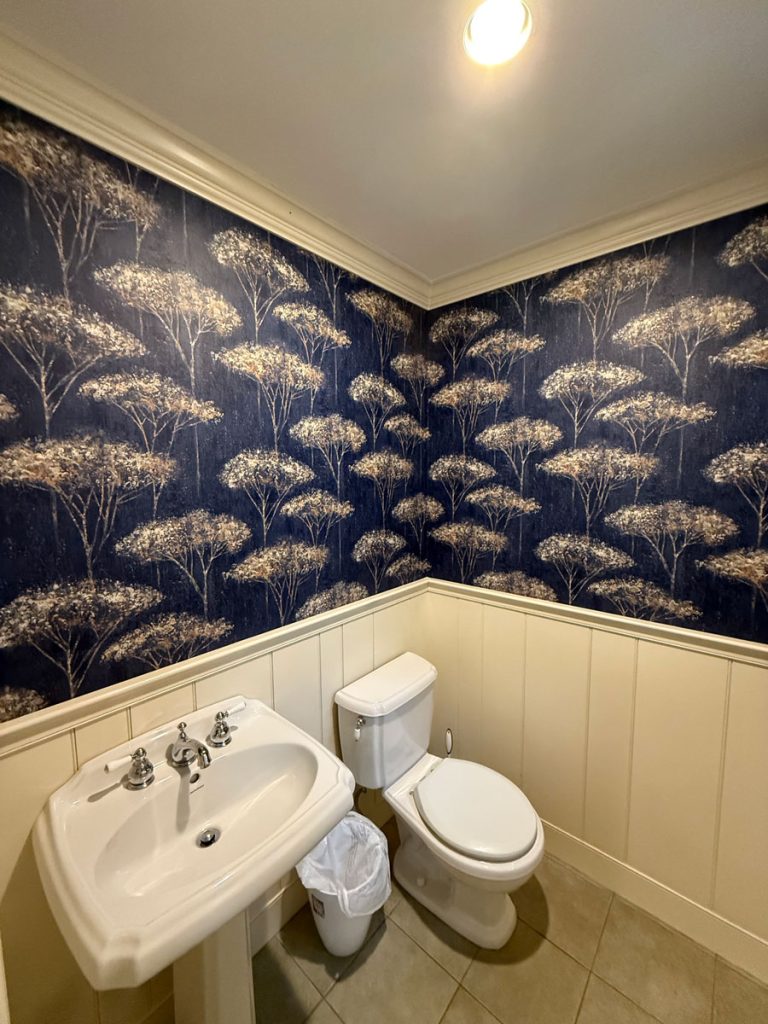
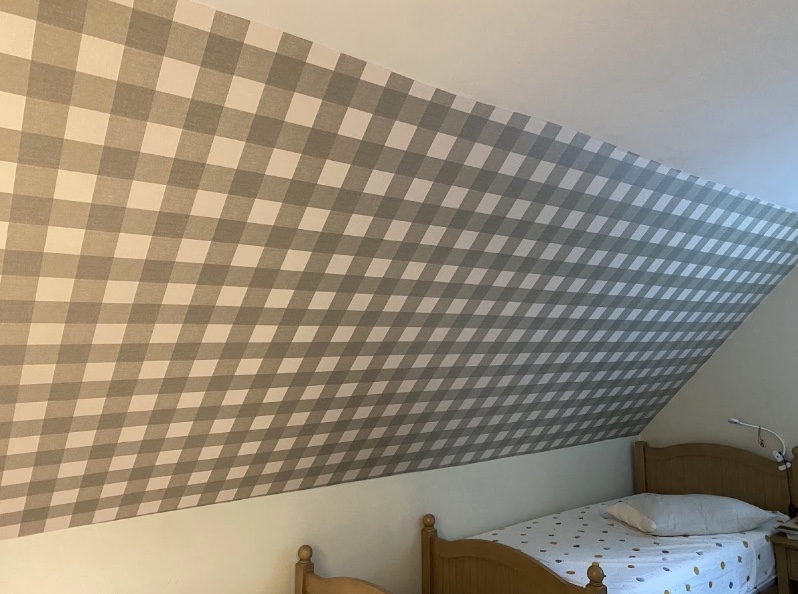
Recent Wallpaper Installation Projects Across Connecticut Shoreline
Ready to Bring Timeless Beauty to Your Home?
Tell us a bit about your project, and we’ll get back to you promptly to schedule an estimate.