
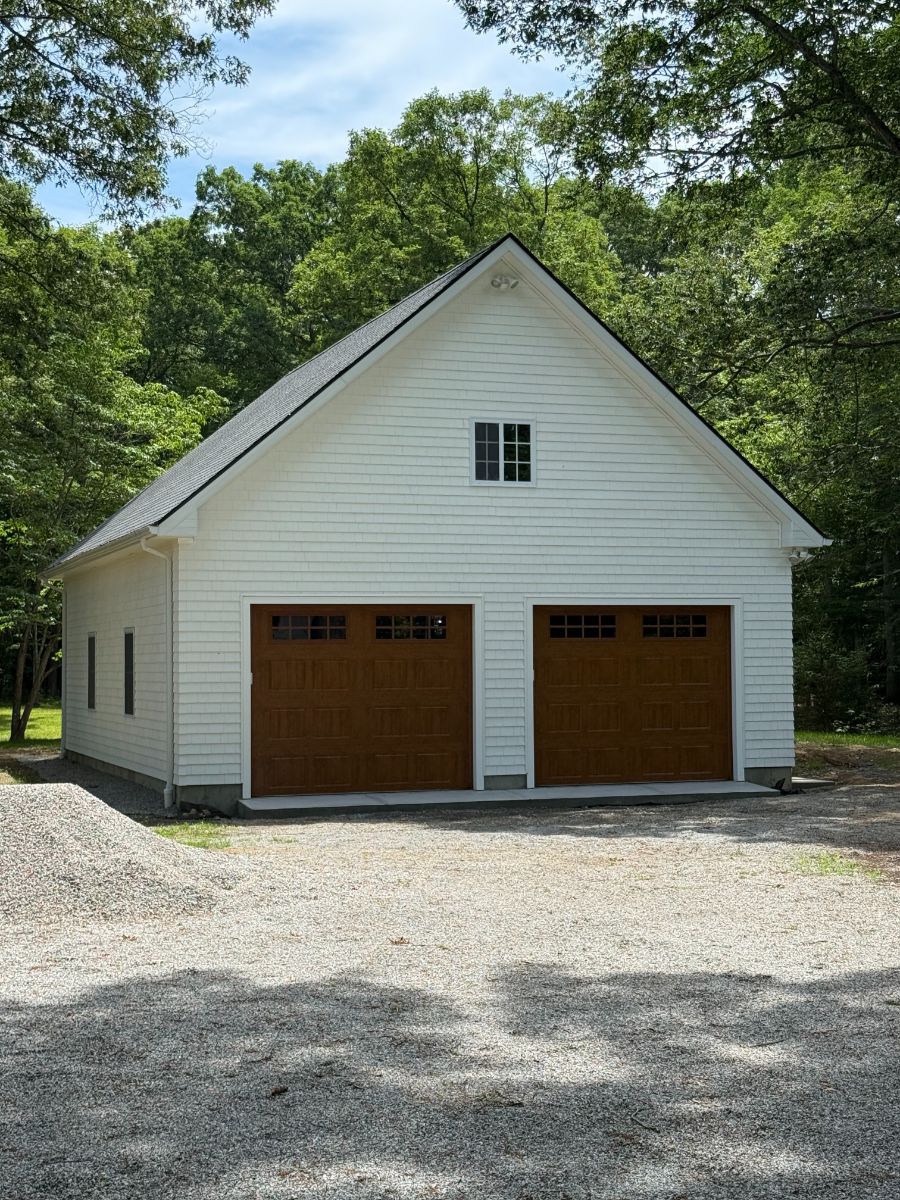
What Are the Signs Your Connecticut Shoreline Home Needs a Fresh Coat of Paint?
If your exterior paint is chalking, bubbling at the trim joints, or fading on south- or west-facing walls exposed to Long Island Sound, it’s time to repaint, here’s the full diagnostic. These seven signs show up faster and more predictably on shoreline homes than inland ones, since salt air, humidity, and stronger coastal UV accelerate paint failure in specific, recognizable patterns. Below is what each sign actually means and whether it calls for a touch-up or a full repaint.
1. Faded or Dull Color on South- and West-Facing Walls
Coastal sunlight is stronger and more direct than inland sunlight, and UV rays gradually break down pigments in paint. Walls facing south or west toward the water take the brunt of this exposure and typically fade first and fastest often noticeably lighter or flatter than the same color on a shaded, north-facing wall of the same house. If a once-vibrant color now looks washed out specifically on the water-facing side of your home, that’s a normal sign of UV wear rather than a paint defect, and it usually means that side is due for attention before the rest.
2. Stains and Water Spots That Won’t Clean Off Near Windows and Entry Points
Scuffs, fingerprints, and water spots happen in every home, but on shoreline properties, water spots near windows, doors, and other entry points often trace back to wind-driven rain and coastal humidity rather than ordinary interior wear. Once cleaning no longer restores the surface, the paint film itself has usually worn down enough to hold onto marks instead of releasing them at that point, repainting is more effective than continued spot-cleaning.
3. Peeling or Bubbling Paint on South- or West-Facing Walls Exposed to Sound Weather
Moisture and temperature swings are more extreme along the shoreline than inland, and paint on walls that take direct wind-driven rain or salt-laden air off Long Island Sound is especially prone to bubbling or peeling. This isn’t just cosmetic, it exposes drywall or the wood substrate underneath to further moisture damage if left unaddressed, since the paint is what’s protecting those surfaces from humidity and salt exposure in the first place.
4. A Patchy or Uneven Finish From Repeated Touch-Ups
Years of spot touch-ups create visible differences in sheen, texture, or slight color variation across a wall or exterior surface even when the same paint was used each time. This shows up faster on shoreline homes, where UV exposure ages each touch-up at a slightly different rate than the surrounding, older paint. A full repaint restores a uniform tone and texture, rather than trying to blend one more touch-up into an already inconsistent surface.
5. Visible Dents, Chips, or Nail Holes Accumulating Over Time
Individually, small dents, chips, and nail holes aren’t urgent but they accumulate from ordinary daily use, and once there are enough scattered across a wall or exterior trim, patch-and-touch-up starts looking more inconsistent than a full repaint would. Pairing drywall or exterior repair with a full repaint creates a smooth, even foundation rather than a surface with visible patched spots.
6. Chalking or Powdery Residue on Exterior Siding and Trim
This sign is distinctly coastal: a chalky white residue that transfers to your hand after touching siding or trim is one of the clearest indicators that exterior paint is breaking down under UV and salt exposure. Chalking tends to show up first on the sides of a house most exposed to direct sun and coastal wind, and it’s a reliable early sign that the coating’s protective ability is fading even if the color still looks reasonable from a distance.
7. Preparing to Sell, Renovate, or Simply Wanting a Change
A fresh, neutral-toned coat is one of the more cost-effective ways to make a shoreline home feel updated and helps prospective buyers picture their own belongings in the space rather than focusing on faded or scuffed walls. This sign isn’t about damage — it’s about presentation, and it applies whether you’re selling, renovating, or just ready for a change after years with the same palette.
Touch-Up or Full Repaint: How Do You Decide?
- Touch-up is usually enough if the issue is limited to minor scuffs or a few small marks on an otherwise even-toned surface, especially on interior walls or shaded exterior sides with less UV exposure.
- A full repaint is the better call if you’re seeing fading, chalking, peeling, or a patchy finish — particularly on south- or west-facing exterior walls exposed to Long Island Sound weather since a full repaint restores consistency and protection in a way spot touch-ups can’t match.
If your shoreline home is showing several of these signs, especially on the water-facing side, the Simons Painting & Drywall team can assess whether a touch-up or full repaint makes more sense for your specific exposure.
Learn more on our Exterior Painting and Interior Painting pages.
Frequently Asked Questions About When to Repaint
How often should exterior paint be redone on a Connecticut shoreline home?
There’s no fixed universal timeline, it depends on which side of the house you’re looking at and how much direct sun and coastal wind it gets, but south- and west-facing walls exposed to Long Island Sound typically need repainting sooner than shaded or inland-facing walls. Watching for chalking, fading, or peeling on the most exposed side is a more reliable guide than a fixed number of years.
Why does my paint chalk and turn powdery on some sides of my house but not others?
Chalking is caused by UV breakdown of the paint film, and sides of the house that get the most direct sun and coastal exposure, usually south- or west-facing walls near the water — chalk first and most noticeably. It’s a sign that the protective coating is wearing down, even if the color still looks reasonable from a distance.
Can I just touch up peeling paint instead of repainting the whole exterior?
If peeling is limited to a small, isolated area with no other signs of wear, a targeted repair can work. But if peeling is showing up on a wall exposed to wind-driven rain or salt air off Long Island Sound, that’s usually a sign of broader moisture stress on that side of the house, and a full repaint of that elevation typically holds up better than isolated touch-ups.
Does repainting before selling my shoreline home actually increase its value?
A fresh, neutral repaint is generally considered one of the more cost-effective ways to improve how a home shows to buyers, since it helps them picture the space as move-in ready rather than focusing on faded or weathered walls. This matters especially for shoreline homes, where UV and salt exposure can make wear more visible than in an inland home of the same age.

Shea Simons is the owner of Simons Painting & Drywall, a family-owned painting and refinishing company serving Connecticut Shoreline communities from East Lyme and Niantic to Old Saybrook, Madison, and Mystic. Shea and his team specialize in interior and exterior painting, drywall repair and installation, and fine refinishing work for cabinets, furniture, and custom walls. Homeowners along the shoreline know Shea’s crew for meticulous prep work and a finish built to hold up against coastal salt air and humidity.