How Long Does Interior Paint Last Before You Need to Repaint?
Interior paint typically lasts 5 to 10 years in most rooms, though high-traffic areas like hallways, kitchens, and kids’ rooms often need repainting closer to the 3 to 5 year mark, while low-use spaces like formal dining rooms or guest bedrooms can go 10 years or longer. The actual lifespan depends more on paint quality, room usage, and humidity exposure than on a fixed calendar number, so watching for specific wear signs is a more reliable guide than counting years alone.
What Determines How Long Interior Paint Actually Lasts?
A few factors consistently affect paint longevity more than any single “average” number:
- Paint quality: premium paints with higher-quality resins and pigments generally resist fading, scuffing, and staining longer than budget-tier paint, even in the same room.
- Room traffic and use: hallways, kitchens, mudrooms, and kids’ rooms see far more contact, cleaning, and general wear than a guest bedroom or formal living room.
- Humidity and moisture exposure: bathrooms, kitchens, and rooms with poor ventilation experience more moisture cycling, which can accelerate paint breakdown compared to a dry, climate-controlled room.
- Sunlight exposure: rooms with large windows or strong direct sun exposure can see faster color fading than rooms with more indirect or filtered light.
- Application quality: paint applied with proper prep, primer, and adequate coats tends to hold up longer than a rushed job on an under-prepped surface.
How Long Does Paint Typically Last in Different Rooms?
Lifespan varies meaningfully by room type:
| Room Type | Typical Lifespan | Why |
|---|---|---|
| Hallways & entryways | 3–5 years | High foot traffic, frequent contact, scuffing |
| Kitchens | 3–5 years | Grease, moisture, frequent cleaning |
| Kids’ bedrooms & playrooms | 3–5 years | Marks, scuffs, general wear and tear |
| Bathrooms | 4–6 years | Humidity and moisture cycling |
| Living rooms & family rooms | 5–7 years | Moderate use, some sun exposure |
| Primary bedrooms | 7–10 years | Lower traffic, more controlled conditions |
| Formal dining rooms & guest rooms | 8–10+ years | Minimal use and traffic |
These are general ranges — a well-ventilated kitchen with quality paint might outlast a poorly ventilated bathroom with budget paint, regardless of which room type is “supposed to” last longer.
What Are the Signs That Interior Paint Needs to Be Redone?
Rather than relying on a fixed number of years, these are the practical signs that indicate paint has reached the end of its useful life:
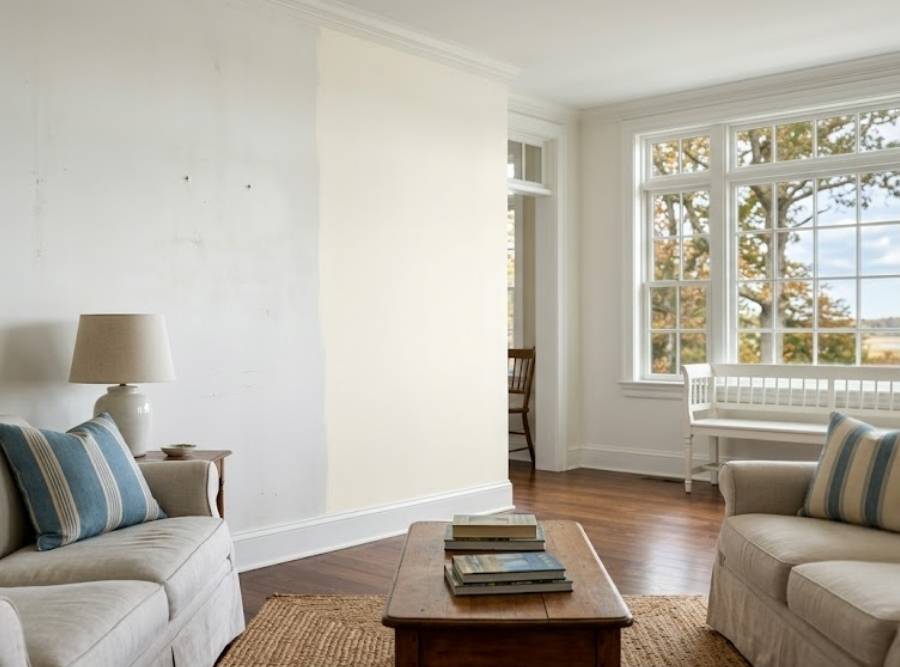
- Fading or noticeably duller color compared to when it was applied
- Stains or marks that no longer come clean with washing
- Peeling, cracking, or bubbling anywhere on the surface
- A patchy, uneven look from years of accumulated touch-ups
- Visible dents, scuffs, or nail holes scattered across the wall
- A chalky residue that comes off on your hand when you touch the surface
Any one of these on its own might just need a touch-up, but several appearing together usually signals it’s time for a full repaint rather than continued spot maintenance.
Does Paint Quality Really Make That Big of a Difference in Lifespan?
Yes, often more than people expect. Premium interior paints use higher-quality resins that resist fading and better pigments that hold color truer over time, along with formulations designed to resist scuffing and staining more effectively than economy paint. The price difference upfront is usually smaller than the cost difference of repainting a room two or three years earlier than necessary, which is why paint quality is often one of the better places to spend a little more on a project rather than cut corners.
Does Old Lyme’s Coastal Environment Affect How Long Interior Paint Lasts?
Coastal humidity can influence interior paint lifespan, particularly in rooms with less climate control or ventilation — bathrooms, mudrooms, or rooms near frequently opened windows and doors can see more moisture cycling than the same room type in a drier inland location. This doesn’t mean every room in an Old Lyme home ages faster than elsewhere, but it’s worth factoring in for spaces that regularly experience humidity swings, since consistently damp conditions can shorten paint’s effective lifespan compared to a well-ventilated, climate-controlled room.
Should You Wait Until Paint Fully Fails Before Repainting?
Generally, no. Addressing fading, staining, or minor wear before it progresses to peeling or cracking is usually less work and produces a better result than waiting until the paint has fully broken down. A room showing early wear signs can often be refreshed with proper prep and a couple of coats, while a room where paint has fully failed may need more extensive prep — scraping, patching, and priming before a new coat will hold properly.
If you’re wondering whether it’s time to repaint a specific room in your Old Lyme home, the Simons Painting & Drywall team can assess the current condition and let you know what makes sense for your space.
Learn more on our Interior Painting page, or see our Old Lyme location page.
Frequently Asked Questions About Interior Paint Lifespan
How often should I repaint high-traffic rooms like hallways and kitchens?
High-traffic areas typically need repainting every 3 to 5 years due to frequent contact, cleaning, and general wear, compared to 7 to 10 years for lower-use rooms like primary bedrooms or guest rooms. Watching for fading, staining, or scuffing is a more reliable guide than relying on a fixed schedule alone.
Does more expensive paint actually last longer, or is that just marketing?
Premium paints generally do last longer in practice, using higher-quality resins and pigments that resist fading, scuffing, and staining better than budget-tier paint. The added upfront cost is often smaller than the cost of repainting a room a few years earlier than necessary with a lower-quality product.
Why does my bathroom paint seem to wear out faster than other rooms?
Bathrooms experience more humidity and moisture cycling than most other rooms, which can accelerate paint breakdown compared to a dry, well-ventilated space. This is especially true in bathrooms with limited ventilation or frequent hot showers without an exhaust fan running.
Does Old Lyme’s coastal climate make interior paint wear out faster?
It can, particularly in rooms with less ventilation or climate control, since coastal humidity contributes to moisture cycling that can shorten paint’s effective lifespan in those specific spaces. Well-ventilated, climate-controlled rooms are less affected by this than rooms like bathrooms or mudrooms that see regular humidity swings.
Shea Simons is the owner of Simons Painting & Drywall, a family-owned painting and refinishing company serving Connecticut Shoreline communities from East Lyme and Niantic to Old Saybrook, Madison, and Mystic. Shea and his team specialize in interior and exterior painting, drywall repair and installation, and fine refinishing work for cabinets, furniture, and custom walls. Homeowners along the shoreline know Shea’s crew for meticulous prep work and a finish built to hold up against coastal salt air and humidity.