What’s the Difference Between Primer and Paint and Do You Always Need Both?
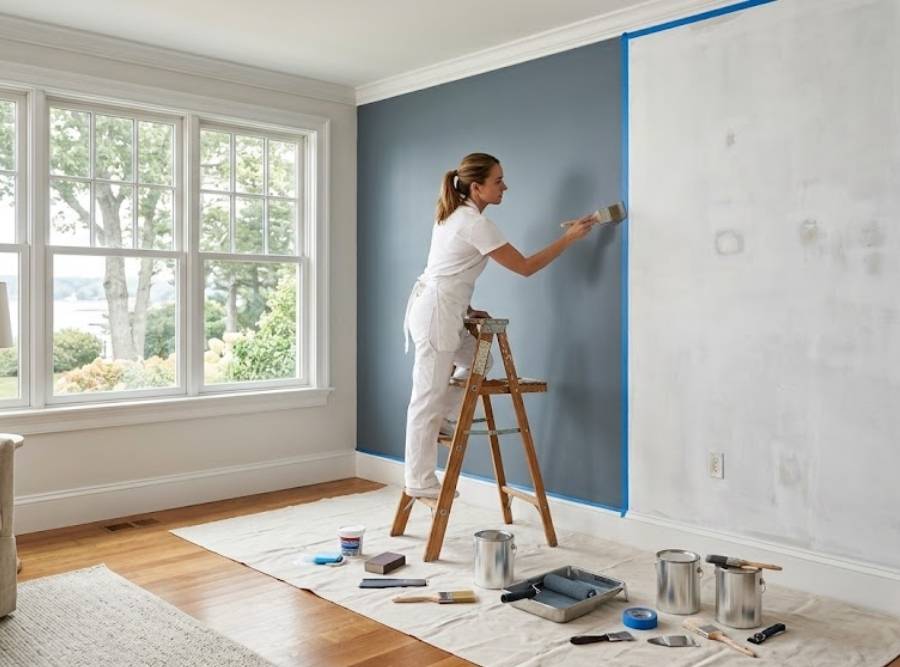
Primer and paint serve different purposes: primer seals the surface, blocks stains, and creates a uniform base for paint to bond to, while paint provides the color and finish. You don’t always need a separate primer coat — a well-maintained wall being repainted in a similar color often doesn’t require one but bare drywall, repaired patches, stained surfaces, dramatic color changes, and raw wood almost always do. Skipping primer when it’s actually needed is one of the most common reasons paint fails early on Connecticut Shoreline homes.
What Does Primer Actually Do That Paint Doesn’t?
Primer is formulated to bond tightly to raw or porous surfaces and create a consistent base layer — something paint alone isn’t designed to do as effectively. It seals porous materials like bare drywall or wood so they don’t absorb the finish coat unevenly, blocks stains and discoloration from bleeding through into the new paint, and helps hide the underlying color when making a significant change. Paint, by contrast, is formulated primarily for color, sheen, and surface protection, it can adhere reasonably well to an already-sealed, previously painted surface, but it isn’t designed to solve the adhesion and sealing problems that primer handles.
Skipping primer where it’s needed doesn’t just risk a less attractive result, it can lead to uneven color, visible patchy spots (sometimes called flashing), or paint that fails to bond properly and peels prematurely.
When Can You Skip Primer and Just Repaint?
Primer usually isn’t necessary in a few common situations:
- Repainting a wall in a similar color and the existing paint is in good condition — no cracking, peeling, or major staining
- Using a paint-and-primer-in-one product on a surface that’s already sealed and in reasonable shape
- A simple refresh coat on trim or walls that were painted correctly the last time, without any bare or repaired spots
In these cases, the existing paint layer is already doing the sealing and bonding work that primer would otherwise provide, so an additional primer coat mostly adds time and cost without a meaningful performance benefit.
When Do You Always Need Primer First?
Primer is essentially non-negotiable in these situations:
- Bare or new drywall: unprimed drywall paper is porous and will absorb paint unevenly, leading to a blotchy, inconsistent finish without a sealing coat first.
- Patched or repaired areas: fresh joint compound is more porous than the surrounding painted wall and needs primer to prevent uneven sheen or visible flashing once painted.
- Stained or water-damaged surfaces: water stains, smoke damage, or marker and crayon marks can bleed through standard paint without a stain-blocking primer underneath.
- Dramatic color changes: switching from a dark color to a much lighter one (or the reverse) usually needs a tinted primer to avoid multiple coats of finish paint just to achieve full coverage.
- Bare wood, whether interior trim or exterior siding: raw wood absorbs paint unevenly and can lead to poor adhesion without a proper primer designed for wood.
- Glossy or slick existing surfaces: high-sheen paint, laminate, or certain trim finishes need a bonding primer since standard paint won’t adhere well on its own.
Does the Answer Change Between Interior and Exterior Projects?
The core principle is the same, but exterior projects on the Connecticut Shoreline have an added factor: coastal humidity and salt air make proper sealing more important, not less. Exterior wood siding and trim that’s been exposed to moisture cycles benefits from a primer that seals and stabilizes the surface before paint goes on, since skipping that step on an already-vulnerable coastal exterior tends to shorten the paint job’s lifespan more noticeably than it would on a drier, inland home. Interior projects are generally more forgiving, since interior surfaces aren’t dealing with the same ongoing moisture and UV exposure but bare drywall, patches, and stains still need primer regardless of location.
Can You Use a Paint-and-Primer-in-One Product Instead of Two Separate Products?
Combination products can work well for straightforward refresh projects — repainting a wall in reasonably good condition with a similar color. They’re generally not a substitute for a dedicated primer in the situations above, though, since combination products are formulated as a compromise between sealing power and finish quality, rather than optimizing fully for either one. For bare drywall, significant stains, or dramatic color changes, a separate, purpose-built primer followed by your finish paint typically produces a more reliable result than a combination product trying to do both jobs at once.
How Do You Decide What Your Specific Project Needs?
The surface condition, not personal preference, should drive the decision:
- Check for bare spots, patches, or repairs — these need primer.
- Check for staining, water marks, or smoke damage — these need a stain-blocking primer.
- Compare the current and planned colors — a dramatic shift usually benefits from a tinted primer.
- Assess the existing paint’s condition — sound, similar-color paint in good shape often doesn’t need a fresh primer coat.
If you’re not sure which category your project falls into, it’s worth having it assessed before starting rather than guessing, since the wrong call in either direction, skipping needed primer or adding an unnecessary coat affects either the durability or the timeline of the project.
If you’re planning an interior or exterior painting project on the Connecticut Shoreline and aren’t sure whether your surfaces need primer first, the Simons Painting & Drywall team can assess your specific walls or siding and recommend the right approach.
Learn more on our Interior Painting and Exterior Painting pages.
Frequently Asked Questions About Primer and Paint
Do I always need to prime before painting a wall?
Not always, if you’re repainting in a similar color and the existing paint is in good condition with no bare spots, stains, or repairs, you can often skip primer. Bare drywall, patched areas, stains, or a dramatic color change generally do need primer first.
What happens if I skip primer when I actually needed it?
Skipping needed primer commonly leads to uneven color absorption, visible patchy spots where repairs or bare areas show through differently than the rest of the wall, or paint that doesn’t bond properly and peels sooner than expected. These issues are often more noticeable weeks or months after painting than immediately after the job is done.
Is paint-and-primer-in-one just as good as using separate products?
For a simple refresh on a wall already in good condition, combination products often work fine. For bare drywall, significant stains, or dramatic color changes, a dedicated primer followed by finish paint typically performs more reliably, since combination products balance sealing and finish quality rather than optimizing fully for either.
Does exterior painting on a coastal Connecticut home need primer more than an inland home?
Often yes, coastal humidity and salt air put more stress on exterior wood, so properly sealing the surface with primer before painting tends to matter more for long-term durability than it would on a drier, inland home. Skipping primer on an already moisture-exposed coastal exterior can shorten the paint job’s lifespan more noticeably.
Shea Simons is the owner of Simons Painting & Drywall, a family-owned painting and refinishing company serving Connecticut Shoreline communities from East Lyme and Niantic to Old Saybrook, Madison, and Mystic. Shea and his team specialize in interior and exterior painting, drywall repair and installation, and fine refinishing work for cabinets, furniture, and custom walls. Homeowners along the shoreline know Shea’s crew for meticulous prep work and a finish built to hold up against coastal salt air and humidity.