
What to Expect When a Painter Works in Your Home: A Homeowner’s Prep Guide
A professional interior painting project typically involves an initial walkthrough and estimate, a defined prep day (moving furniture, protecting floors and fixtures, patching and sanding), the painting itself over one to several days depending on scope, and a final walkthrough before the crew leaves. Knowing what to expect at each stage and what’s genuinely helpful for you to do beforehand versus what the painting team handles, makes the whole process smoother for Connecticut Shoreline homeowners preparing for their first professional paint job.
What Happens Before Painting Day Even Starts?
Most projects begin with a walkthrough, where the painter assesses the rooms involved, notes any existing damage like cracks, dents, or peeling, and discusses color and finish choices. This is also when scheduling gets finalized — larger projects or homes with extensive prep needs may take longer than a single room refresh.
Before the crew arrives, it’s worth doing a few things on your end:
- Remove small, breakable items from shelves, walls, and surfaces in the rooms being painted.
- Take down artwork, curtains, and wall-mounted items unless you’ve arranged for the crew to handle this.
- Clear a path for furniture moving, and note anything particularly heavy or fragile.
- Confirm parking and access arrangements, especially in tighter shoreline neighborhoods with limited street parking.
You generally don’t need to move large furniture yourself, most professional crews include this as part of the job but clearing smaller items in advance keeps the first day moving efficiently rather than being spent on cleanup that could’ve happened ahead of time.
What Does a Professional Crew Actually Do to Protect Your Home?
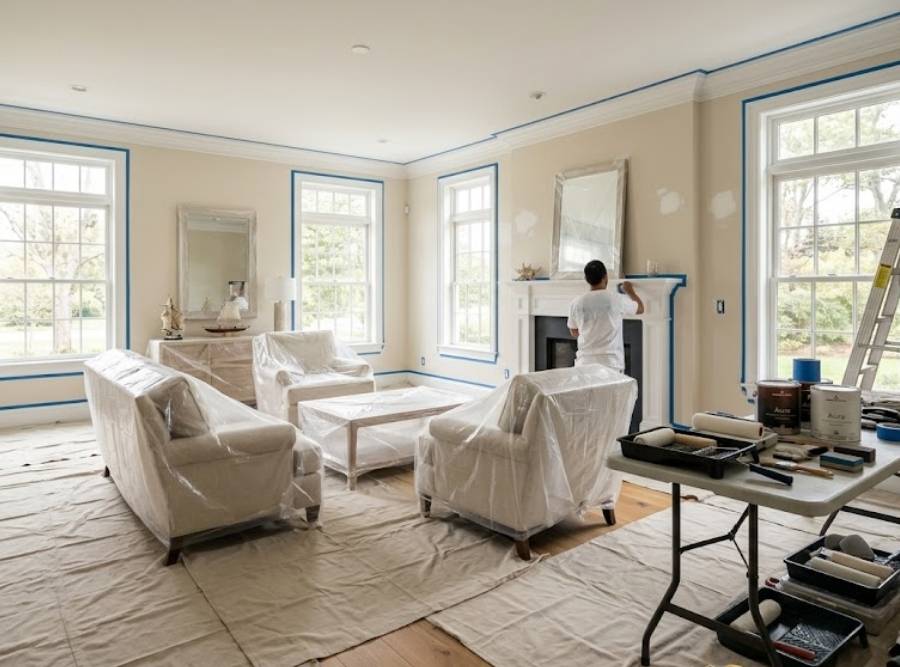
Protecting the areas around the work zone is one of the most important parts of a professional job, and it happens before any paint goes on:
- Floors are typically covered with drop cloths or protective paper, especially in high-traffic areas
- Furniture that can’t be moved out of the room is covered and pushed to the center, away from walls
- Light fixtures, outlet covers, and hardware are removed or carefully taped
- Trim, floors, and adjacent surfaces get taped off along the edges of the painting area
This protection step often takes longer than people expect on the first day, but it’s what prevents drips, dust, and accidental marks on floors, furniture, and fixtures that have nothing to do with the actual paint job.
What Does the Prep Work Before Painting Actually Involve?
Surface prep is what determines how the final paint job looks and how long it lasts, and it typically includes:
- Cleaning walls to remove dust, grease, or grime that could affect paint adhesion
- Filling small dents, nail holes, and minor cracks with patching compound
- Sanding patched areas smooth once dry
- Priming any bare patches, stained areas, or surfaces changing to a dramatically different color
- A final check for any spots that need additional attention before the first coat goes on
This step is usually the least visually dramatic part of the project, but it’s the part that most affects whether the paint holds up well over the following years, a rushed prep day is one of the most common reasons a paint job looks great on move-out day and starts showing problems within a season.
What Happens on Actual Painting Days?
Once prep is complete, painting typically proceeds with:
- Cutting in edges and corners by hand for clean lines around trim, ceilings, and fixtures
- Rolling or spraying the main wall surfaces, usually in two coats for full, even coverage
- Allowing appropriate drying time between coats, which can vary based on humidity and room ventilation
- A walk-through of each room as it’s completed to catch any spots needing a touch-up
For Connecticut Shoreline homes, coastal humidity can extend drying time between coats compared to a drier inland location, so a project might take a bit longer to complete than the same scope elsewhere — this is a normal part of working near the water rather than a sign of a delay.
What Should You Expect During the Final Walkthrough?
Before the crew considers the job finished, a final walkthrough typically covers:
- Checking all painted surfaces in good lighting for missed spots, drips, or uneven coverage
- Confirming trim, ceilings, and edges have clean, consistent lines
- Reinstalling outlet covers, hardware, and any fixtures that were removed
- Removing all protective coverings and doing a final cleanup of the work area
- Addressing any touch-ups on the spot before the crew leaves
This is your opportunity to walk through the space with the painter and point out anything that doesn’t look right, a reputable crew will address these items before calling the job complete rather than asking you to follow up afterward.
What’s the Best Way to Prepare a Room Before the Painters Arrive?
The most helpful things a homeowner can do ahead of time are removing small items, taking down wall décor unless arranged otherwise, and communicating any specific concerns — pets, allergies, particular timing needs before the project starts. Beyond that, most of the heavy lifting, both literally and in terms of technique, is the crew’s responsibility.
If you’re planning an interior painting project along the Connecticut Shoreline and want to know what to expect before scheduling, the Simons Painting & Drywall team is happy to walk through the process for your specific space.
Learn more on our Interior Painting page, or visit our homepage to see the full range of services we offer.
Frequently Asked Questions About What to Expect From a Professional Painter
Do I need to move my own furniture before painters arrive?
Generally no, most professional crews include moving and covering furniture as part of the job, though clearing small, breakable items from shelves and surfaces beforehand helps the first day move more efficiently. It’s worth confirming what’s included with your specific painting company ahead of time.
How long does a typical interior painting project take?
Timelines vary based on the number of rooms, the amount of prep needed, and drying conditions, coastal humidity in Connecticut Shoreline homes can extend drying time between coats compared to a drier inland location. A single room might take a day or two, while a whole-home project can take considerably longer.
What should I do with pets during a painting project?
It’s best to let the painting company know in advance if you have pets, since open doors, moved furniture, and drying paint fumes are all easier to manage with a plan in place. Many homeowners choose to keep pets in a separate, unaffected area of the home or arrange for them to be elsewhere during the most active work days.
What happens if I notice something I don’t like during the final walkthrough?
A reputable painting crew will address touch-ups and concerns on the spot during the final walkthrough rather than leaving you to follow up afterward. It’s worth taking the time to look at painted surfaces in good lighting before the crew packs up and leaves.

Shea Simons is the owner of Simons Painting & Drywall, a family-owned painting and refinishing company serving Connecticut Shoreline communities from East Lyme and Niantic to Old Saybrook, Madison, and Mystic. Shea and his team specialize in interior and exterior painting, drywall repair and installation, and fine refinishing work for cabinets, furniture, and custom walls. Homeowners along the shoreline know Shea’s crew for meticulous prep work and a finish built to hold up against coastal salt air and humidity.